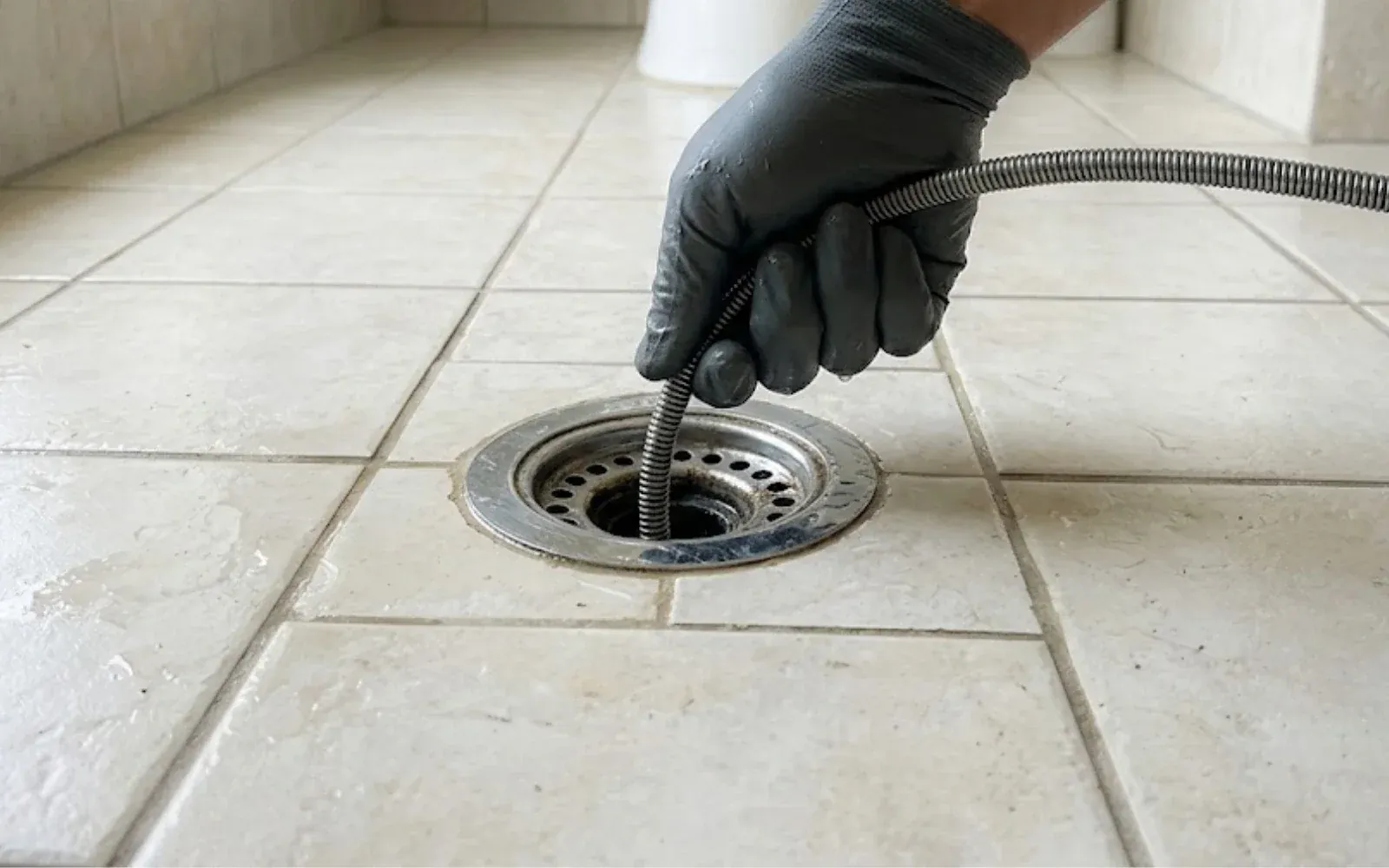
Yes, sand can clog your drains in Braintree, MA. It does not dissolve or float, so it sinks to the bottom of the trap, bend or low spot in the pipe and packs together. Mixed with hair, soap and grease, it can set into a hard layer that water cannot move on its own.
The good news is that a sandy clog is usually close to the fixture, and the fix is often a trap cleaning rather than a dig. Below you will find where sand comes from, how to clear a light case, what to avoid, and when to call for a cable or a jetter.
Where the sand comes from
Nearly every sand clog traces to one of these sources.
Beach and playground days.
Kids rinsed in the tub or a utility sink bring a surprising amount down the drain. A sandy swimsuit in the washing machine does the same to the laundry line.
Sump pits and floor drains.
A sump pit collects fine soil and sand from the ground around the foundation. When it builds up, it can foul the pump and spill into a nearby floor drain.
Renovation dust.
Tile, drywall and masonry work leave fine grit. Rinsing tools or buckets in a sink sends it into the trap.
Garden and yard rinsing.
Washing muddy boots or vegetables in a laundry sink adds grit that settles in the horizontal run.
Pet and hobby sources.
Sandy litter, aquarium gravel and craft sand are heavy and should never be rinsed down a drain.
Aging pipes.
A worn pipe can let soil in through joints. If sand returns with no obvious source, the line may be damaged and needs a camera.
Fine sand slides through quickly but stalls at a bend or sag. That is why the clog shows up in a trap or the first horizontal stretch.
How to clear a light sand clog from a sink or tub
This works for a trap you can reach. If you cannot reach it or the pipe is old, stop and call.
Stop using the fixture.
Sand packs tighter when water keeps running over it. Put a bucket and a towel under the trap before you begin.
Open the trap.
Unscrew the slip nuts by hand or with a wrench, lower the trap into the bucket and let the sandy water drain out. Scrape the rest into the bucket with a spoon.
Clear the pipe stub.
Look into the wall pipe with a flashlight. A wet and dry vacuum or a small bottle brush can pull out loose sand without pushing it further in.
Reassemble and flush.
Put the trap back, snug the nuts, and run water slowly. Check for leaks and listen for gurgling that suggests more sand further down.
What helps and what makes it worse
Several common instincts push sand deeper into the line.
Helps.
- Opening the trap and removing the sand by hand.
- Using a wet and dry vacuum at the opening.
- Rinsing sandy items outside with a hose.
- Installing a fine mesh strainer on tub and sink drains.
- Calling for a hydro jetting pass if sand keeps returning.
Makes it worse.
- Flushing with a lot of water to move it along.
- Pushing a plunger hard against a sandy plug.
- Pouring chemical drain cleaner on packed sand.
- Running a cable that only bores a hole through the packed layer.
- Rinsing sandy buckets in the same sink repeatedly.
Several drains slow after a beach week?
Call (617) 752-0573 and tell the dispatcher which fixtures are slow. A licensed plumber can bring the right tool on the first visit.
When a DIY clear is enough and when to call
| Situation | DIY first? | Why. |
|---|---|---|
| Sand visible in a tub or sink trap. | Yes. | A trap cleaning removes most of it. |
| Slow drain after a beach trip, one fixture. | Yes, with care. | Likely a trap or first stretch. |
| Sand returning after you cleaned the trap. | No. | More is in the line, and a cable may only compact it. |
| Several fixtures slow, gurgling or backing up. | No. | The clog may be in a branch or the main line. |
| Sand with no clear source. | No. | A damaged pipe may be letting soil in, and a camera should check. |
| Sandy water at a basement floor drain. | No. | May involve the sump or the main line. |
A plumber chooses between a cable and a jetter based on how packed the sand is. Our drain cleaning page explains the tools, and hydro jetting is the heavy-duty option for sandy or gritty lines.
Braintree: sump discharge, the sewer and who owns the pipe
Braintree's Water and Sewer Department rules prohibit sump pump, roof leader and foundation drain discharge into the sanitary sewer. They also treat allowing inflow and infiltration as a violation. If a sump pit keeps filling with sand and silt, the fix is to clean the pit and send the discharge outdoors, not to route it to a floor drain or the sewer.
The same rules make the owner responsible for the sewer lateral from the building to the property line when the house fronts a public way, and the Town takes the part in the public way. So a sand clog that sits in your lateral is yours to clear, while one beyond the property line should be reported to the Town. Confirm the boundary for your address with the Water and Sewer Department first.
When sand reaches the main line
A sandy plug in the main line usually shows itself as more than one fixture slowing at once, gurgling in the toilet, or water at a basement floor drain. A plumber runs a camera to see how far the sand extends and whether the pipe is cracked or sagging. Sewer line cleaning with a jetter can scour the pipe wall without compacting the sand.
If the camera shows the pipe is letting soil in, the clog will return until the pipe is repaired. We dispatch to Quincy and Weymouth as well as Braintree, so tell the dispatcher your address and what you have seen.
Keeping sand out of your drains this summer
- Rinse feet, toys and towels outdoors with a hose.
- Use a fine mesh strainer on tub and sink drains.
- Wipe sandy surfaces with a damp cloth before rinsing.
- Wash sandy swimsuits outdoors before they go in the machine.
- Clean the sump pit on a schedule and keep the discharge pointed outside.
- Never rinse tile, mortar or grout tools in a household drain.
Sand and drain questions from Braintree homes
No. Sand is mineral grit, so it will not dissolve or break down, and it settles at the first low spot. It has to be removed or flushed out by a machine.
Chemical cleaners do not dissolve sand, and they can sit on top of the packed layer and harm your pipes. Remove the sand mechanically.
Sand can wear parts over time and clog the trap. The bigger risk is the clog, but a lot of grit passing through a disposal is not good for the grinding parts.
Either sand is entering the line upstream, or soil is entering through a damaged pipe or a connected sump. A camera inspection shows which.
A jetter usually does better because it flushes sand out instead of boring through it. A cable can leave a tunnel in a packed plug that closes again.
The same dispatch line covers Quincy and nearby towns. Call to confirm availability for your address.
No. The Town's water and sewer rules prohibit sump pump discharge into the sanitary sewer. Pipe the discharge outdoors and keep the pit clean.