A drain that has stopped moving water is a bad enough problem on a quiet afternoon and a worse one at midnight, which is why our 24/7 line in Braintree, MA answers around the clock. While you wait for us, stop running water anywhere in the house, leave chemical cleaners on the shelf, and move rugs and stored boxes away from the low drain.
Drain cleaning is the removal of whatever is narrowing or blocking a fixture drain or branch line: grease, hair, soap film, paper, wipes, food scraps or fine roots. This page is about the pipes inside your house, meaning kitchen and bathroom sinks, tubs, showers, floor drains and the laundry standpipe. If the blockage sits in the big pipe that leaves the house, that is a separate job described under sewer line cleaning.
Our first question on the phone is how many drains are affected, because the answer tells us where to start. One slow sink points to its own trap or branch. Several fixtures acting up together point further down the line.
Water rising in the tub or floor drain right now
Water that comes up where it should go down means the blockage is below that fixture and something else is feeding the same line. Treat it as active until a plumber has looked at it.
- Stop using sinks, showers, the dishwasher and the washing machine.
- Do not flush toilets that are gurgling or filling the tub.
- Pull towels and rugs back and keep children and pets off wet floors.
- If sewage is in the water, keep everyone out of the area and call us.
What the symptom tells us before we open a trap
Drains talk before they quit. Where the trouble shows up usually narrows the blockage to a few feet of pipe.
One fixture slow, the rest fine.
The blockage is in that fixture's own trap or short branch. This is the most common and the easiest to clear.
Lowest drain backs up first.
A basement floor drain or shower bubbling when upstairs water runs means the shared line is restricted somewhere past the branches.
Gurgling and slow flush together.
Air is being pulled through traps because the line is partly closed or a vent is blocked. Both need to be checked.
Washing machine overflows at the standpipe.
Lint and soap film narrow the standpipe and the trap below it. The machine pumps faster than a coated pipe can carry.
Smell with no standing water.
A dry trap, a film of grease inside the pipe or a partial blockage holding old waste. Running water does not cure it.
Clears for a day, then returns.
The center of the blockage was punched through but the walls are still coated. The pipe needs to be scraped, not just opened.
None of these are guesses we leave unchecked. We confirm the location by how the cable behaves and, when it matters, with a camera.
Kitchen sink clogs: grease, food and the disposal
Kitchen drains clog differently from bathroom drains. Cooking fat runs through as a liquid, cools inside the pipe and sticks as a waxy lining that catches food particles layer by layer. Over months the opening shrinks until a spoonful of rice stops the flow.
If your sink has a disposal, we clear the line beyond it, not just the disposal chamber, and we check whether the dishwasher drain loop is dumping into the same blockage. A double sink that drains slowly on one side usually has the restriction right at the shared tailpiece. Disposal faults themselves are covered on our garbage disposal repair page.
The fix is a cable with a cutting head pulled through the kitchen branch until it comes back clean. A thin bead of grease gets scraped off the pipe walls, not just poked through. We then run hot water to prove the flow before we pack up.
Drain full and water still coming?
Stop using the water, then call (617) 752-0573. We line up a visit and tell you the price before work starts.
How a drain job actually goes
Every job follows the same four moves, though what happens inside each one depends on what the pipe tells us.
Test and locate.
We run water at the affected fixtures and listen at cleanouts and vents. That shows whether the problem is local to one trap or shared by a whole branch.
Open the access.
We pull the trap, use a cleanout, or go in through the fixture opening. Pulling a trap is gentler on old pipe than forcing a cable through a tight sink strainer.
Cut and retrieve.
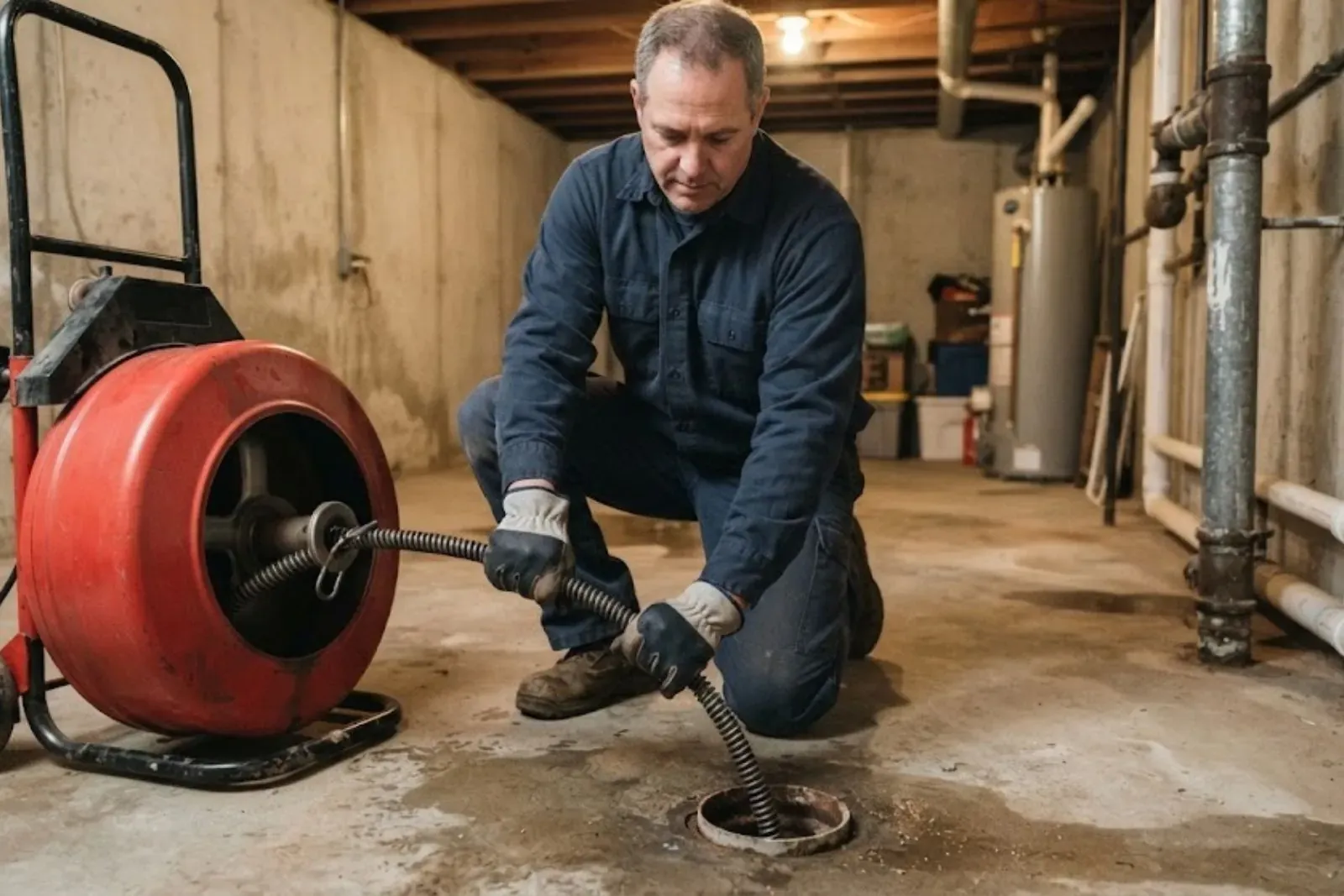
A hand snake handles short traps. A drum machine with a cutting head clears longer branches and gets the debris out so it cannot settle a few feet downstream.
Prove the flow.
We refill and drain every fixture on that line, check the trap seals and look for leaks at the joints we disturbed before we call it done.
Snake, drum machine, water jet or camera
People say snake for everything, but plumbers choose among four tools. The choice depends on the pipe diameter, the material of the blockage and how far it sits.
| Tool | Good for | Limit to know about. |
|---|---|---|
| Hand auger. | A single sink, tub or toilet trap, hair, a dropped object. | Short reach. Pushes a dense mass rather than removing it. |
| Drum machine with cutters. | Kitchen and bath branches, laundry lines, light roots. | Needs an access point and a pipe that is not collapsed or badly offset. |
| Water jet. | Grease coating and heavy buildup on long runs. | Not for every pipe. See hydro jetting for the cautions. |
| Camera. | Repeat clogs, odd cable behavior, anything that returns. | Shows the cause but does not clear it on its own. |
If a cable stops at the same spot twice, we stop swinging blades and look instead. A repeat clog is information.
Shower and tub drains that will not empty
Hair is the main culprit in a tub or shower, bound together with soap film into a mat that sits just below the strainer or inside the trap. A plastic pull-through strip sometimes lifts it. When the mat has slid down past the overflow tee, a cable passed through the overflow or the drain opening is the cleaner route.
A tub that drains slowly only when the sink above it runs is telling you the branch is shared and narrowed. We clear the whole branch in that case, because opening only the tub leaves the same coating waiting for the next shower.
Older homes and why drains snag sooner
Braintree's housing stock leans old. The latest Census survey data puts the median year a home was built at 1957, with about 27.5 percent of units dating to 1939 or earlier. Pipe from those eras was often cast iron or galvanized steel, and the inside surface roughens with age.
A roughened wall catches grease and lint faster than smooth plastic does. If your house is in that group, a clog every year or two on the same sink often means the pipe walls themselves, not bad habits. We tell you what the cable brings back and whether a camera look is worth the cost of seeing it.
Drain line leaks under sinks and in walls
A drain can leak as well as clog. Water that appears only after you drain a sink or tub, not when you run the supply, points at a drain joint, slip nut or cracked trap. A stain on a ceiling below a bathroom after a long bath is the same story from the other side.
These are repairs, not cleaning. We pinpoint the joint, replace the failed part and test with a full fixture of water. If the source looks buried in a wall, we say so plainly and explain what opening it would take, with leak detection as the next step when the supply side is in question.
What you can try first and when to stop
Some blockages give way to a basic effort. Knowing where to stop saves you a mess and sometimes a damaged pipe.
Reasonable to try yourself.
- A cup plunger on a sink, with the overflow blocked by a wet cloth.
- Lifting the stopper or strainer and cleaning off the hair.
- Removing the trap under a sink with a bucket below it.
- Boiling water down a metal sink drain that has only grease.
Time to call us.
- More than one fixture is slow or backing up.
- A plunger works briefly and the water returns.
- Chemical cleaner has already been used and the drain is still full.
- Water or sewage is rising in a tub or floor drain.
What drives the price of a drain job
Drain work varies more than most plumbing. Two sinks side by side can be completely different jobs, so we do not quote by the fixture.
Homeowner policies rarely pay for clearing a simple clog. Some cover water damage that follows a sudden backup, depending on the endorsement you carry, so check your policy language and photograph the area before cleanup. Call us at (617) 752-0573 and we give you a clear price before work starts.
Drain questions we hear from Braintree homeowners
Yes. Our dispatch line is answered 24/7, so a backed-up tub at two in the morning gets the same call-back as a weekday. Stop running water and call (617) 752-0573 while we line up the visit.
Usually it is grease and food scraps building a lining inside the branch, not one bad day. Older cast iron or galvanized lines in pre-1960 houses roughen over time and catch debris sooner. A thorough cable pass or a hydro jetting visit addresses the lining, and a camera shows whether the pipe is the real issue.
Not always. One slow fixture is a drain problem. Several fixtures backing up together, especially the lowest ones, suggest the main line, and that is a sewer line cleaning job.
We would rather you did not. Standing chemical in a blocked drain can burn skin and eyes when we open the trap, and it does not remove hair or grease mats well. Tell us if you already used some so we wear the right protection.
A correctly sized cable and cutter run by someone who reads the resistance is safe in healthy pipe. Brittle cast iron or a flattened section needs a lighter touch, which is why we check with a camera when a cable acts oddly.
Use strainers in tubs and showers, wipe grease from pans before washing, and keep wipes and paper towels out of toilets, even the ones labeled flushable. If it clogs again anyway, ask us to scope the line, as we do under sewer inspection.
Yes, we serve neighboring towns from Braintree as well. See our Quincy coverage for details on that area.