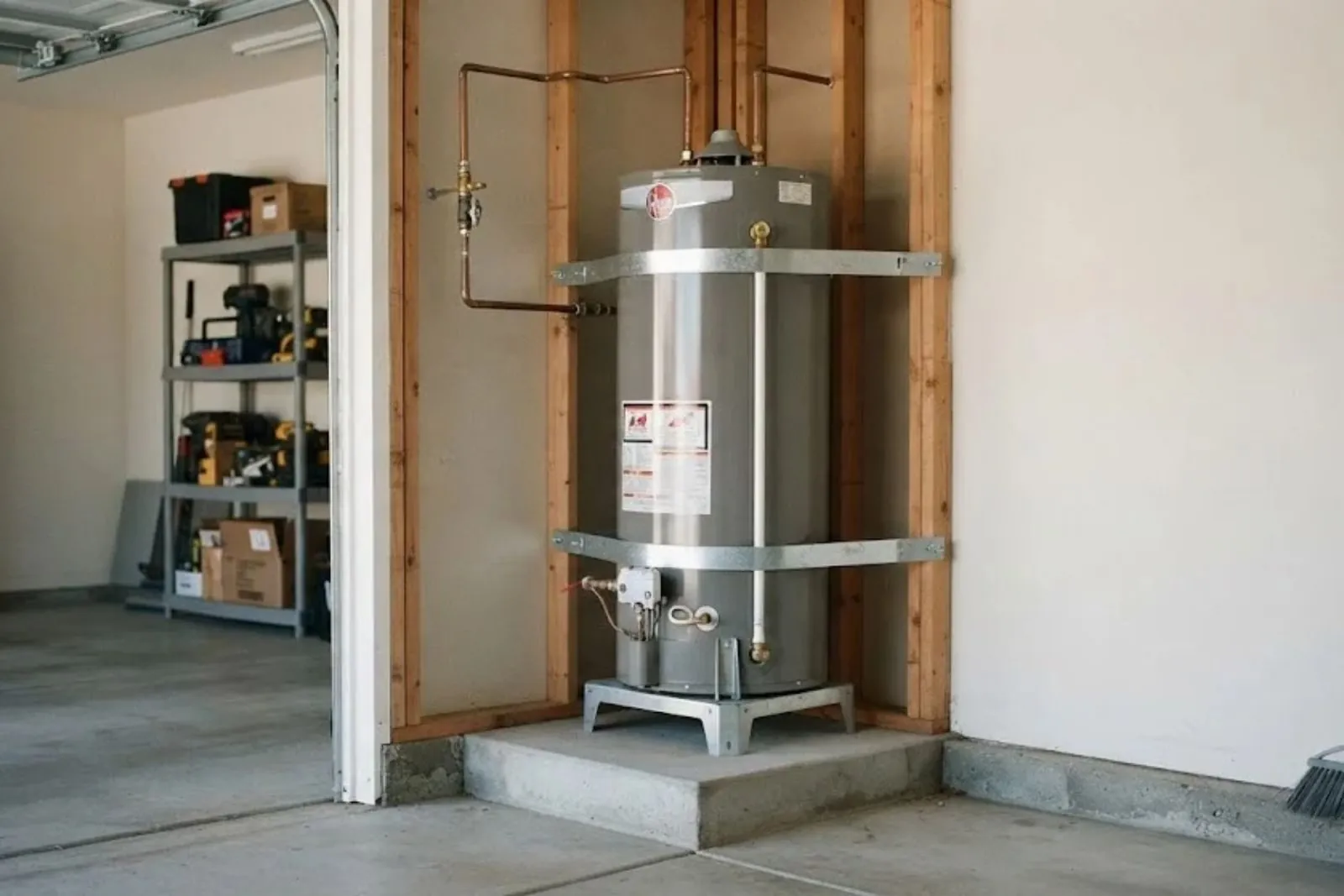
If your water heater is leaking or has quit completely, you need an answer today, and our 24/7 line exists for that. Close the cold water valve above the tank, switch off the breaker or the gas control, and call (617) 752-0573 while the puddle is still small.
Water heater replacement in Braintree, MA means removing a failed tank or tankless unit and installing a new one that fits your fuel, venting, and hot water demand, with the permit handled the way Massachusetts requires. Below is how we decide a tank is finished, what the choices are, and what the job looks like.
Water pooling around the tank right now
Find the cold water shutoff on the pipe entering the top of the heater. It is usually a lever or a round handle, and closing it stops the tank from refilling and feeding the leak.
Then cut the fuel. On an electric heater, switch off its breaker. On a gas heater, turn the control knob to off, and if you smell gas, leave the house and call your gas utility's emergency line or 911 before you call us.
- Do not drain a hot tank onto bare skin or a finished floor, because the water can scald.
- Move boxes, paint cans, and electronics out of the water's path.
- Leave the discharge pipe from the T&P valve open and unblocked.
- Photograph the data plate on the tank so the plumber can read the model and age.
Telling a leaking fitting from a failed tank
Not every puddle means a new heater. Dry the top and sides with a towel and watch for ten minutes. Drops forming at the cold inlet, the hot outlet, or the T&P valve point to a fitting a plumber can often fix without touching the tank.
Water seeping from the bottom of the jacket, or a rusty weep at the base, usually means the steel shell has corroded through. The glass lining inside cracks with age, and the anode rod, a sacrificial metal rod, is consumed first. Once the shell weeps, no patch holds, and replacement is the only sound answer.
We also rule out look-alikes before you spend money. Condensation on a cold tank in a humid basement, a failing expansion tank, and a dripping line from a nearby washer can all mimic a failed heater. A new tank will not cure a leak that was never the old one's fault.
Replace, repair, or wait: how the symptom reads
Use this as a first pass. A plumber on site confirms it with a pressure check and a look at the data plate.
| What you see | What it usually means | Likely call. |
|---|---|---|
| Water seeping from the bottom of the tank. | Shell corrosion, the lining has failed. | Replace. |
| Drip at the T&P valve or its pipe. | Pressure spikes, a worn valve, or thermal expansion. | Test, then repair or add an expansion tank. |
| Rust colored hot water only. | Aging tank and a spent anode rod. | Plan a replacement soon. |
| Pilot or igniter will not stay lit. | Thermocouple, igniter, or gas valve fault. | Repair if the tank is sound. |
| No hot water, tank dry. | Heating element, thermostat, or control failure. | Repair first, replace if the tank is old. |
| Popping or rumbling. | Sediment baked onto the tank floor. | Flush, or replace if it keeps returning. |
As a rule of thumb, a tank well past the age implied by its serial number that is also leaking is not worth repairing. A newer tank with one failed part usually is. The serial number decodes to a build date, and we read it with you before we recommend anything.
Not sure it needs replacing?
Describe where the water is coming from and the age on the data plate, and we will tell you straight whether a repair is worth it. Call (617) 752-0573.
No hot water at all, and the tank is dry
A cold shower does not always mean a dead heater. On electric tanks, a tripped high limit reset or a burned element is common. On gas tanks, a pilot that blew out or a worn thermocouple is common. These are repair calls, and we sort them before anyone suggests a swap.
If the same part has failed twice, or the repair would eat a large share of a new unit, we say so. Same-day appointments are available when the schedule allows, and the dispatch line takes calls at night and on weekends.
Six choices that shape the new heater
Replacing like for like is the quickest route. The gap between old and new is also a good moment to fix problems the old setup hid.
Fuel.
Gas, electric, and heat pump heaters need different supplies. Changing fuel adds work such as a new gas line or a dedicated circuit, so settle it before the old tank comes out.
Capacity.
Size follows how many people use hot water at once, not the square footage of the house. A home with a soaking tub and teenagers needs more recovery than two adults who shower in the morning.
Venting.
Atmospheric gas heaters use a draft hood and a flue. Power vent and direct vent models send exhaust through plastic pipe to an outside wall, which changes where the heater can sit. If one flue served a boiler and a heater together, it must be rechecked after one appliance changes.
Safe waste pan.
Massachusetts plumbing code calls for a safe waste pan under tanks of six gallons or more installed above living space. On a replacement, an accepted automatic shutoff device with a pan can stand in for the drain piping, which helps in a second floor or condo closet.
Expansion tank.
When a check valve or backflow device sits on the incoming line, the extra volume hot water creates has nowhere to go. A small expansion tank absorbs it and keeps the T&P valve from weeping every time the burner fires.
Efficiency and controls.
Higher efficiency units cost more up front and use less fuel. Condensing gas models also need a condensate drain. Ask for the energy label so you compare real figures and not sales language.
Tell us what your basement already handles well. The venting and gas line you have may settle the fuel question before preference does.
What older Braintree homes change about the swap
Census survey data puts the median Braintree home at 1957 construction, and about three in four homes predate 1980. That means many basements hold a heater tied to an old flue, aged gas piping, and shutoff valves that have not turned in decades. Expect the plumber to replace a seized valve or a corroded nipple while the tank is out, and ask about it when you get the price.
Braintree's own Water and Sewer Department reports hardness of 47.8 mg/L in its 2024 water quality report, which converts to roughly 2.8 grains per gallon (our approximate conversion). That is soft water, so scale builds on elements and tank floors more slowly than in hard water regions, and you do not need to buy a softener for hardness to protect the new heater. Sediment and anode wear still happen, so plan a periodic flush.
Permits, the inspector, and urgent work
Massachusetts rule 248 CMR 3.05 says plumbing work may not be installed, altered, removed, or replaced until a permit is issued, and that permits go only to licensed individuals. In our reading that covers a water heater swap, and a gas-fired heater carries a gas permit as well. For the exact local requirement, ask the Braintree plumbing inspector at Town Hall.
Urgent jobs are handled differently. The rule lets a licensee do emergency work first when the required tests pass and the work is safe, as long as the inspector is notified and the inspection follows by the next working day. That is why a heater that dies on a January night does not have to wait for office hours. Be wary of anyone who offers to skip the permit, because unpermitted work can raise questions when you sell the house.
How the swap goes once we are in your basement
Most replacements follow this order, though gas conversions and relocations add stages.
Shut down and drain.
We close the water and fuel, attach a hose to the drain valve, and empty the tank to a floor drain or outside. A tank with a clogged drain valve may need to be cut out while still partly full.
Disconnect and remove.
Supply lines, the gas connector or electrical feed, the flue, and the T&P discharge come off. Ask what is included before work starts, including who carries the old tank out and where it goes.
Set, pipe, and vent.
The new heater goes on its pan or stand, fresh connectors and a new T&P discharge are fitted, and the flue or vent is rebuilt. Gas joints are checked with leak solution and a pressure test, not by smell.
Fill, test, and walk through.
We fill the tank, purge air from the lines, light or power it, and check draft and temperature. You get a walk through of the shutoffs and the permit paperwork, so the next emergency is a quick one.
Heat pump water heaters and the rebate question
A heat pump water heater pulls warmth from the surrounding air and moves it into the tank, so it uses much less electricity than a standard electric element. It needs floor space, open air around it, and a condensate drain, and it cools and dries the room it sits in. A damp basement usually benefits, while a tight closet usually does not.
Mass Save runs a rebate page for heat pump water heaters, and its terms change each year, so read the current page before you buy. At the time of writing it requires installation by a licensed plumber and applies when the heater replaces an electric, gas, propane, or oil unit. Customers of a municipal electric department qualify only if they are also natural gas heating customers of a Mass Save sponsor.
Braintree Electric Light Department lists rebates for hybrid electric water heaters on its own rebate page, with no amounts shown. If your power comes from them, check that page before ordering. We do not quote rebate figures because they change, and a wrong number could cost you.
What moves the price of a new water heater
There is no honest flat number until someone has seen the basement. These are the factors that set it, and a call to (617) 752-0573 gets you the real figure with a clear price before work starts.
A heater that fails from age is normally treated as wear and tear, which many homeowner policies exclude. Sudden water damage from a burst tank may be handled differently, so photograph everything and read your policy or call your insurer before cleanup starts.
Water heater replacement questions from Braintree homeowners
Yes. The dispatch line takes calls overnight and on weekends, and we offer same-day appointments when available. While you wait, close the cold water valve at the tank, switch off the breaker or gas control, and keep the area clear. We also serve neighbors in Quincy and nearby towns.
Under 248 CMR 3.05, replaced plumbing work needs a permit, and only licensed individuals can be issued one. Ask the Braintree plumbing inspector at Town Hall for the local detail. Urgent replacements may proceed first if the inspector is notified and the inspection follows by the next working day.
If the tank body is sound and the failed part is cheap, water heater repair makes sense. If the shell is leaking, replacement is the only fix. We read the data plate and test the tank with you before recommending either.
Often yes, if you have the space, a condensate drain, and electrical capacity. Mass Save has a rebate page with yearly terms, so check it before you buy. A planned swap like this belongs on our water heater installation page.
Shut the water and power or gas to the tank first, then turn off the breaker for any outlet the water has reached. Photograph the damage before moving things. If water kept running for days, a leak detection visit can confirm nothing else is leaking.
It can be, but it needs a bigger gas line and a different vent, and the upfront work is greater. Our tankless water heater page explains the trade-offs and the yearly flush they need.