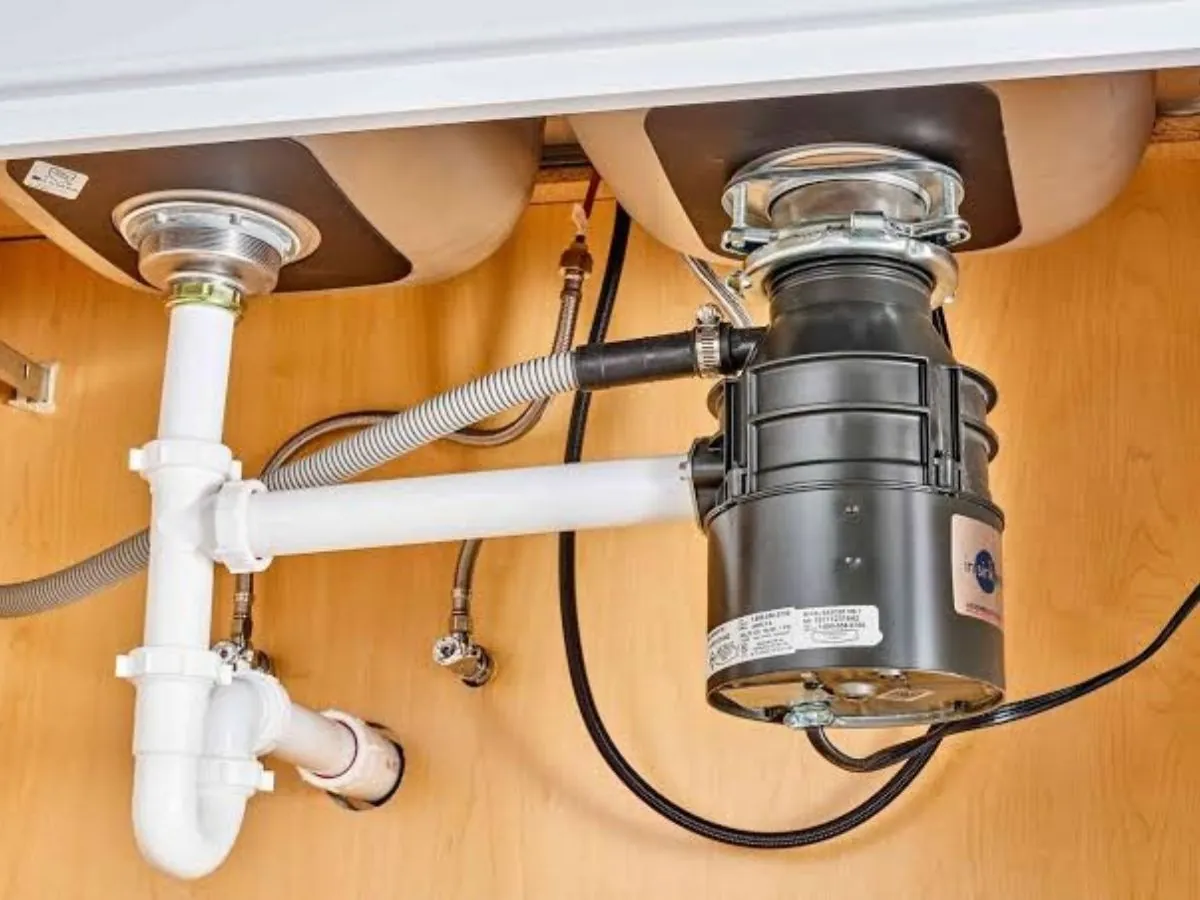
A garbage disposal on a double sink in Braintree, MA mounts under one bowl, and the second bowl drains into the same waste line through a pipe called a continuous waste. That pipe joins the disposal's outlet or the trap arm with a tee, so both bowls reach the same trap. If the join is wrong, one bowl drains slowly or gurgles.
The dishwasher also connects to the disposal in most kitchens. Its drain hose attaches to a small inlet on the disposal body, and a knockout plug inside that inlet has to be removed first. Forgetting the plug is a common reason a dishwasher will not drain after a new disposal goes in.
Two common layouts for the second bowl
Kitchens vary, but most double sink disposal installs follow one of these two patterns.
| Layout | How the second bowl joins | Works well when | Watch out for. |
|---|---|---|---|
| Tee at the disposal outlet. | A continuous waste pipe from the second bowl meets the disposal's outlet at a tee before the trap. | Both bowls are close to the same depth. | The tee must slope toward the trap or water stands in the pipe. |
| Tee after the disposal on the trap arm. | The disposal drains into the trap arm and the second bowl joins at a tee on that line. | The cabinet is tight and the disposal needs height. | A long horizontal run can collect food if the slope is shallow. |
Which one a plumber chooses usually comes down to cabinet depth, the bowl heights and where the wall drain is.
How the installation goes, in order
This is what a typical install involves. It is more fitting and adjusting than heavy work.
Prepare the sink and the drain.
The old strainer or flange comes out and the sink opening is cleaned. The plumber checks the bowl depth, the trap height and whether the cabinet has room for the disposal body.
Mount the disposal.
A mounting ring goes into the sink flange, the unit locks onto it and the discharge elbow points toward the trap. The dishwasher inlet knockout plug is removed if a dishwasher hose will connect.
Join the second bowl.
The second bowl's tailpiece runs through a continuous waste pipe to a tee at the disposal outlet or the trap arm, with the pipe sloping toward the trap.
Power, test and run water.
The disposal is plugged into a switched outlet or wired to a switch. Water runs through both bowls and the dishwasher cycle is checked for leaks at every joint.
What goes wrong on a double sink with a disposal
Most problems come from slope, fit or the dishwasher hookup rather than from the disposal itself.
Second bowl drains slowly.
The continuous waste has a flat spot or a dip where water pools, or the tee is partly blocked by food debris.
Water comes up in the other bowl.
Either the trap or the drain beyond it is clogged. Water from the disposal side backs into the second bowl through the tee.
Dishwasher does not drain.
The knockout plug was never removed, the hose is kinked, or the high loop that keeps wastewater from flowing back was skipped.
Leak at the sink flange.
The mounting assembly was not seated or the putty and gasket failed. The drip is under the sink at the top of the disposal.
Gurgling from the drain.
The drain is not venting well. Slow gurgling after the disposal runs points to a venting or partial blockage issue, not the unit.
Disposal jams or hums.
A utensil, bone or fibrous peel is stuck. Unplug it and turn the shaft with the wrench that came with it before pressing reset.
Sink backing up right now?
Stop running water and the dishwasher, then call (617) 752-0573. We answer around the clock and book same-day appointments when available.
Which bowl should the disposal go under?
Either bowl works, and a few details decide it.
The deeper bowl.
- More room under the bowl for the disposal body.
- Keeps the trap height reasonable.
- Works with the bowl you use for food scraps.
- May need a longer continuous waste to the second bowl.
The shallower bowl.
- Tighter clearance for the disposal and trap.
- May leave little room for storage or the dishwasher hose.
- Raises the chance of a drain slope problem.
- Occasionally forced by the layout of the wall drain.
The dishwasher connection deserves five minutes
The dishwasher drain hose should rise to a high loop under the counter or connect through an air gap before it joins the disposal, so dirty sink water cannot flow back into the machine. The right method depends on your kitchen and local code, so ask the plumber which one applies in your house and see that it is done.
If a new disposal was installed and the dishwasher still leaves standing water, check the knockout plug first. It is a plastic disc inside the disposal's side inlet, and it must be knocked out with a screwdriver before the hose connects.
What the disposal should and should not handle
A disposal is meant for soft food scraps washed down with plenty of cold water. Grease, coffee grounds in volume, fibrous peels, pasta and rice that swell, and bones are the usual causes of clogs. Cooled grease coats the pipe walls further downstream and builds up where you cannot see it.
If a double sink backs up again and again after you fit a disposal, the issue may be the drain behind it. A garbage disposal repair visit can show whether the unit is at fault, and drain cleaning clears the kitchen line when it is not. If you are fitting a new unit with a remodel, a plumbing installation visit covers the drain, trap and shutoffs together.
Where your disposal waste goes in Braintree
The MWRA lists Braintree for sewer service, and the Town's own Water and Sewer Department operates the local system. For a home on that system, what goes down the kitchen drain travels in your pipe to the Town's sewer rather than to a septic tank. A disposal does not change that, but it does add solids and grease to the line you own.
Braintree's Water and Sewer rules make the property owner responsible for the sewer pipe from the house to the property line where the building fronts a public way. The Town takes the section in the street, and the rules are worded unevenly, so confirm the boundary with the Water and Sewer Department before you assume who pays for a clogged lateral. Scraping plates and wiping grease into the trash is cheaper than a repeat clog.
Double sink disposal questions
Yes. The disposal mounts under one bowl and the second bowl drains through a continuous waste pipe that joins the disposal outlet or the trap arm at a tee.
Usually no. Both bowls share one trap after the tee. A second trap can slow drainage and cause venting trouble, so a plumber normally avoids it.
The knockout plug in the disposal's dishwasher inlet is the usual reason. Remove it with a screwdriver and a hammer after unplugging the unit, then check that the hose has a high loop or an air gap.
The deeper bowl usually gives more room for the disposal body and trap. A shallow bowl can leave too little clearance.
It can be, but older drains are narrower and more likely to have slow spots. If your kitchen line already backs up, fix it first or the disposal will make it more obvious.
Braintree's Water and Sewer rules make the property owner responsible from the house to the property line where the building fronts a public way. The Town handles the part in the street. Confirm the boundary with the Water and Sewer Department before assuming who pays.