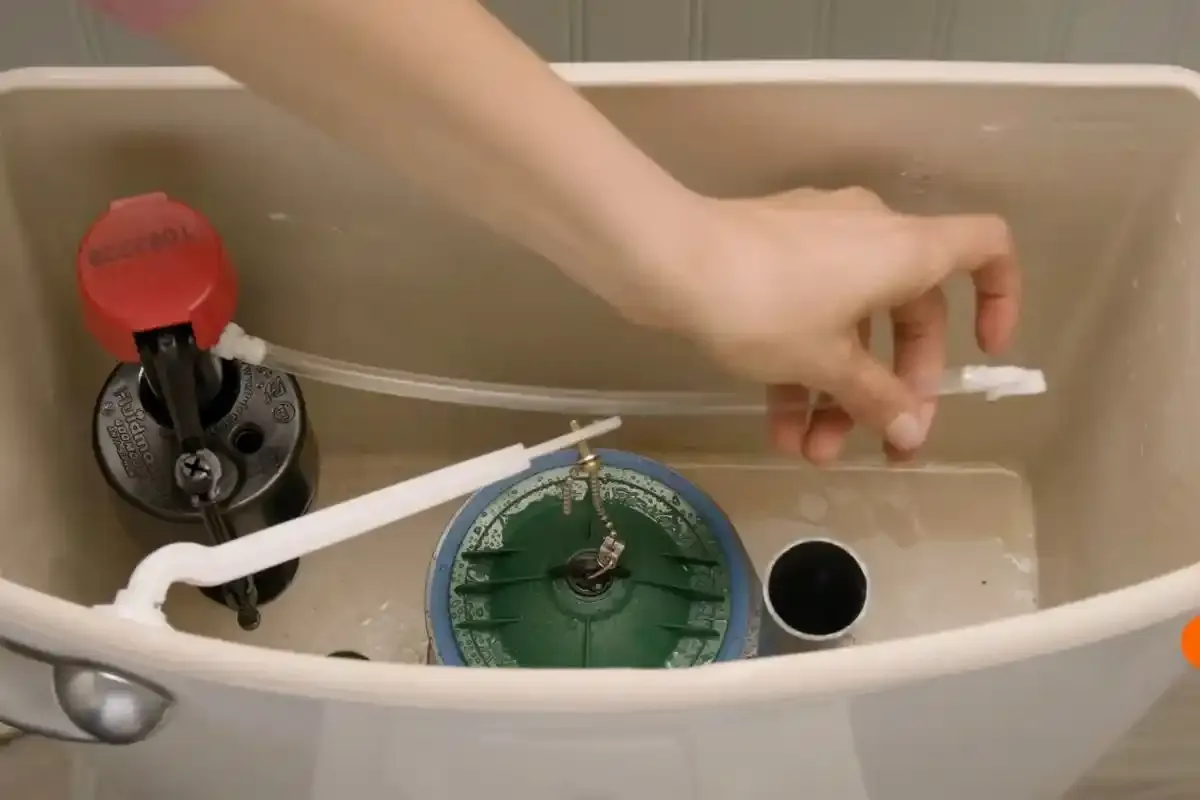
A leaky toilet in Braintree, MA almost always leaks from one of five places. These are the seal at the base, the tank bolts, the supply line and shutoff, the fill valve, or a flapper letting water trickle into the bowl. To tell which, dry everything and watch where the first drop forms.
A leak at the base is the one that needs the most care, because it can soak the floor under the toilet without showing much. If the floor feels soft or the toilet rocks, stop using it and read the warning section below.
Six places a toilet leaks and what each one usually means
Wipe the whole toilet and the floor dry, then press a dry paper towel against each spot below. The towel shows the first wet spot.
Water at the base.
The wax ring or flange seal has failed, or the toilet has loosened on the floor. This is the leak that damages subfloors, so do not ignore it.
Drip under the tank.
The tank to bowl bolts or their rubber washers have worn. Water runs down the back of the bowl and looks like a base leak.
Wet supply line.
The small hose or rigid tube from the wall to the tank leaks at a nut or has a pinhole. Tightening a quarter turn sometimes stops it.
Drip at the shutoff valve.
The stem packing or the compression nut is weeping. Old valves that have not moved in years often leak when turned.
Water running into the bowl.
A worn flapper or a bad seat lets tank water slip into the bowl. You hear the toilet refill on its own.
Sweating, not leaking.
Cold tank surfaces collect condensation in humid weather. The water is clear, forms evenly and stops when the room dries out.
Condensation is the one case where nothing is broken. If the wetness appears all over the tank on a muggy day and nowhere else, you can stop here.
Run a dye test for the silent leak
A flapper that leaks lets water run into the bowl with no puddle at all, so the first sign is a higher water bill. Drop a few drops of food coloring into the tank, do not flush, and wait about fifteen minutes. If color shows up in the bowl, the flapper or seat is leaking.
A new flapper is a small part and an easy replacement. If the bowl stays clear and the water meter still moves with every fixture off, the leak is elsewhere and leak detection is the right next step.
Replacing a failed wax ring, in the order it is done
This is what a base leak repair involves. It is heavier than it looks, since a toilet is awkward and fragile, and our toilet repair work follows the same order.
Shut off and empty.
Close the supply valve, flush, and sponge the tank and bowl dry. Disconnect the supply line and keep a bucket handy.
Lift and inspect.
Remove the closet bolt caps and nuts, rock the toilet loose and lift it straight up onto an old towel. Check the flange for cracks, bent metal or a flange that sits below the finished floor.
Reset the seal.
Scrape off the old wax, set a new ring or a wax free seal on the flange and lower the toilet straight down so the ring compresses once. Lifting and resetting spoils the seal.
Bolt, level and test.
Tighten the nuts a little at a time, alternating sides, so the porcelain does not crack. Reconnect the supply, flush several times and check the base with a dry towel.
Floor wet or ceiling stained below?
Close the supply valve and call (617) 752-0573. We take calls around the clock and book same-day appointments when available.
What you can try yourself and what to hand off
Most toilet leaks are inexpensive parts and a little patience. A few are not.
| Leak | Reasonable DIY step | Call a plumber if. |
|---|---|---|
| Flapper or fill valve. | Replace the part with the same style. | The tank is cracked or the valve will not seal. |
| Tank bolts and washers. | Drain the tank and replace the bolts and rubber washers. | The tank cracks when tightened. |
| Supply line. | Replace a flexible line with a new one of the same size. | The shutoff valve will not close. |
| Base seal. | Replace the wax ring if the floor is solid. | The floor is soft, the flange is damaged or the toilet rocks. |
| Persistent seepage. | None. | You cannot find the source or the ceiling below is stained. |
Soft floor, rocking toilet or a stained ceiling below
Shut off the supply valve and stop using the toilet. A base leak that runs for weeks can rot the subfloor and stain the ceiling of the room below.
If the flange is broken or the floor feels spongy, a new wax ring will not hold. Call (617) 752-0573 and we will book a same-day appointment when available.
Repair the toilet you have or replace it
Age and condition decide this, not the leak itself.
Repair makes sense when.
- The porcelain is sound with no hairline cracks.
- Only seals, bolts, flapper or fill valve have failed.
- The toilet flushes strongly and does not clog often.
- The flange and floor are in good shape.
Replacement makes sense when.
- The tank or bowl is cracked and weeping.
- Parts are hard to match for an old model.
- The toilet clogs or flushes weakly and repairs have not helped.
- You are fixing a damaged flange or floor anyway.
Older houses and the flange problem
A wax ring cannot seal against a damaged flange. Census 2020 to 2024 estimates put the median Braintree home at 1957, with about 27.5 percent built in 1939 or earlier, so older flanges, patched floors and extra layers of tile are more likely here than in a new subdivision. A flange that now sits below the finished floor can leave a gap that a standard ring will not close.
When the flange is the problem, the toilet may need a flange repair ring or a thicker seal designed for that gap. If you have lifted the toilet and the flange looks corroded, stop and call, since a rushed fix there leaks again.
What Braintree's water report says about rubber parts
The Braintree Water and Sewer Department's 2024 Water Quality Report lists a free chlorine residual of 1.37 mg/L, within the 4 mg/L limit, with readings across the system between 0.96 and 1.37. Chlorine is a normal part of safe drinking water, and over time it ages rubber, which is why flappers and fill valve seals are the parts to inspect first in a toilet that has started to run or weep.
The same report lists manganese at 0.088 mg/L, above the 0.05 mg/L aesthetic guideline, and states that this is not a violation. Dark staining in the bowl or tank is therefore plausible and is not a sign of a leak. The report is the source for these numbers, so check the current edition for updates.
Leaky toilet questions we hear
Most often the wax ring or flange seal has failed or the toilet has loosened on the floor. Water from the tank bolts or supply line can also run down and look like a base leak, so dry everything and watch for the first drop.
Caulk around the outside edge hides a leak and can trap water under the toilet. The seal that matters is the one between the toilet and the flange, and that needs a ring, not caulk.
Add food coloring to the tank and wait about fifteen minutes without flushing. Color in the bowl means water is leaking past the flapper or seat. A toilet that refills on its own is another sign.
A slow weep is not, but a steady leak, a soft floor or a wet ceiling below is. Shut off the supply valve and call. Active water on the floor can damage the subfloor quickly.
Repair when the porcelain is sound and only seals or small parts have failed. Replace when the tank or bowl is cracked, parts are hard to find or the toilet has other problems.
Braintree's 2024 Water Quality Report lists a free chlorine residual, and chlorine ages rubber over time, so flappers and seals are the parts that tend to wear. Dark staining can also appear because the report shows manganese above the aesthetic guideline.