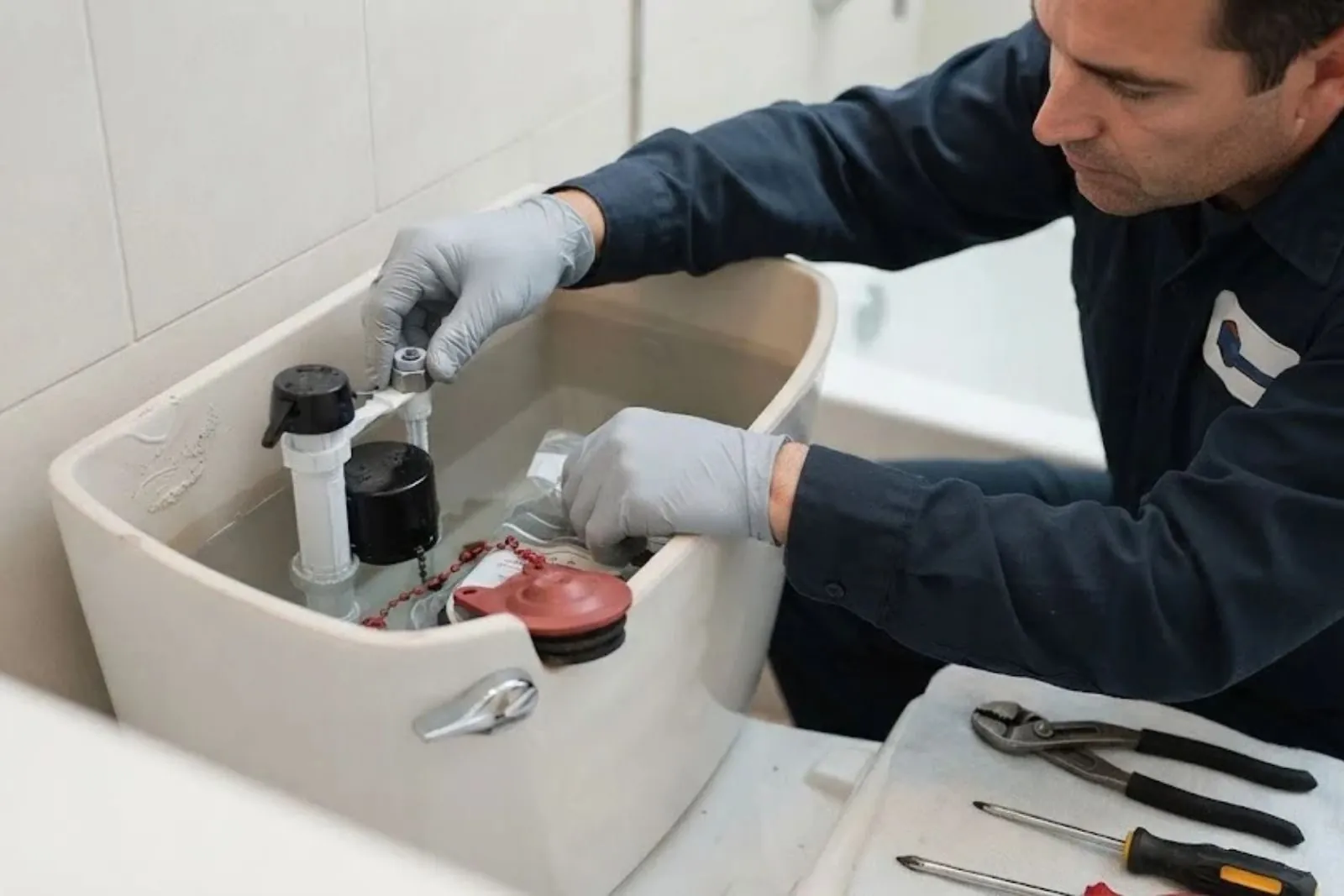
If a toilet is overflowing or water is spreading on the floor, turn the small valve behind the bowl clockwise, lift the tank lid and push the flapper down, then call our 24/7 line. Toilet repair in Braintree, MA covers the parts inside the tank, the seal at the floor, clogs in the trap and the full replacement of a toilet that cannot be saved. Calls at night and on weekends are handled the same way.
Toilets look simple, but each symptom points to a specific part. Match the symptom to the cause and the repair is usually short.
What the symptom usually means
Start here to see how likely a quick fix is.
| What you notice | Most likely cause | Typical fix | DIY or call? |
|---|---|---|---|
| Water runs into the bowl and the tank refills every few minutes. | Worn flapper or a flapper chain that is too tight. | New flapper, adjusted chain. | DIY is reasonable. |
| Hissing, tank never stops filling. | Failing fill valve or float set too high. | New fill valve. | DIY if the shutoff works. |
| Water around the base after flushing. | Failed wax ring or loose closet bolts. | Reset toilet with a new seal. | Call, because the toilet has to be lifted. |
| Toilet rocks or the floor feels soft. | Loose flange or damaged subfloor. | Repair the flange and subfloor, then reset. | Call. |
| Weak flush or slow drain. | Partial clog, clogged rim holes or a low water level in the tank. | Plunge, auger, clean rim jets. | Try once, then call. |
| Water drips from the supply connection. | Worn supply line or shutoff valve. | Replace the line or valve. | Call if the shutoff will not close. |
If the shutoff valve will not turn, do not force it. A seized stop can snap and flood the room.
What to do when the toilet is overflowing right now
Do not flush again. Reaching for the plunger can wait until the water stops rising.
- Turn the shutoff valve behind or beside the toilet clockwise until it stops.
- Take off the tank lid and push the flapper down to stop more water entering the bowl.
- Put towels around the base and keep people off the wet floor.
- If water is coming out of other fixtures too, shut the main valve and call for a drain clearing.
Toilet leaking or backing up? Call now.
Shut the valve behind the bowl and call. We can walk through the first steps while a visit is planned.
A leak at the base of the toilet
A toilet sits on a wax ring (or a rubber gasket) that seals the bowl to the flange, the pipe fitting bolted to the floor. If the ring compresses, dries out or is not centered, water seeps out around the base. The sign is moisture on the floor after a flush, a faint sewer smell, or a stained ceiling below.
The test is to wipe the base dry, flush, and watch where water first appears. Water from the tank bolts or supply line is a different leak. Water on the floor at the base means the seal is suspect.
Replacing the ring is quick, but the flange and floor must be checked first. A cracked flange or soft subfloor will cause the new ring to fail, so the plumber looks at both before setting the toilet.
Running toilets, phantom flushes and a high water bill
A running toilet can waste a large amount of water without any noise. The easiest check is food coloring in the tank, then waiting a few minutes without flushing. If color appears in the bowl, the flapper is leaking.
Chlorine in the public supply gradually hardens rubber parts, so flappers are one of the most common wear items. Braintree's water report lists a free chlorine residual, not chloramine, so rubber parts wear in the usual way, and replacing the flapper every few years is reasonable. If the water in the bowl keeps rippling or the tank refills at odd times, the flapper or fill valve is the first suspect.
If you have fixed the toilet and the water meter still moves with everything off, the leak is elsewhere. See leak detection for how that is found.
How a toilet repair visit goes
The sequence keeps the repair short and prevents repeat visits.
Check the shutoff and supply.
The plumber confirms the stop valve closes and the supply line is sound, because every later step depends on a dry work area.
Identify the failed part.
Dye test for the flapper, a look at the fill valve, a rock test for the flange and a check for a hidden crack in the bowl.
Repair or reset.
Parts inside the tank are replaced with matching fittings. If the toilet is lifted, the flange is inspected and a new seal is installed before resetting.
Test and clean up.
Several flushes, a check for drips at every joint and a wipe of the floor. You get the explanation of what failed and what to watch.
Clogs: plunger first, then the trap and the line
A flange-style plunger with a firm seal clears most toilet clogs. If the water drains slowly or the toilet backs up each time, the problem may be in the drain line and not the bowl. A single clogged toilet usually means the trap. When several fixtures are slow, the clog is farther down the line.
Toilet clogs have a few causes: too much paper, flushed wipes, toys and objects, or a partially blocked vent. A closet auger passes through the trap without scratching the porcelain, while chemical drain cleaners are not recommended in a toilet.
If more than one fixture is affected, our drain cleaning page covers how branch and main lines are cleared. Repeated backups from every drain in the house can point to the main sewer, and a sewer line cleaning visit is the next step.
Repair the toilet you have or replace it
Replacement is not always better, but sometimes repairs cost more than they save.
Repair makes sense when.
- The bowl and tank are not cracked.
- The problem is one worn part, such as a flapper, fill valve or wax ring.
- The toilet flushes well and you like how it works.
- Repairs have been occasional, not frequent.
Replace when.
- The porcelain is cracked or the tank leaks through the shell.
- Parts are hard to match on an old model.
- It clogs often even after the line is clear.
- You are remodeling and want a different height, bowl shape or flush performance.
What affects the cost of toilet work
A flapper and a full replacement are different jobs, so the cost range is wide. These are the real factors.
Insurance usually covers sudden overflow damage but not wear. Photograph any water damage and keep the failed part if you can. Call for the real number.
Installing a new toilet
A new toilet is a half-day job in most bathrooms. The plumber shuts off the water, removes the old unit, cleans the flange, sets a new seal and bolts the toilet down. Then the supply line is connected and the toilet is tested.
Plumbing work generally requires a permit under state rules, so ask the plumber whether replacement in your house needs one. For bathroom layouts or moving a toilet, see plumbing installation.
We also serve homeowners in Holbrook and nearby towns on the same 24/7 line.
Quick answers about toilet trouble
Yes. The 24/7 line is answered around the clock, so an overflowing or leaking toilet at night or on a weekend gets a plan. Shut the valve behind the toilet first. Same-day appointments are offered when the schedule allows.
A worn flapper is the usual cause. Water slips past the seal into the bowl and the fill valve restarts the tank. A dye test confirms it.
Most often the wax ring has failed or the toilet is loose. It can also be a supply line or a tank bolt leak, so wipe it dry and watch where water appears first.
It is possible for a handy person. The risk is a damaged flange or subfloor that you cannot see until the toilet is lifted, which is why many homeowners call.
If only that toilet clogs, the trap or the bowl is the cause. If other drains are slow too, the line is blocked. See drain cleaning.
Typically a few hours, longer if the flange or floor needs repair first.
Only if the problem is the toilet. A loose flange or uneven floor has to be corrected first.