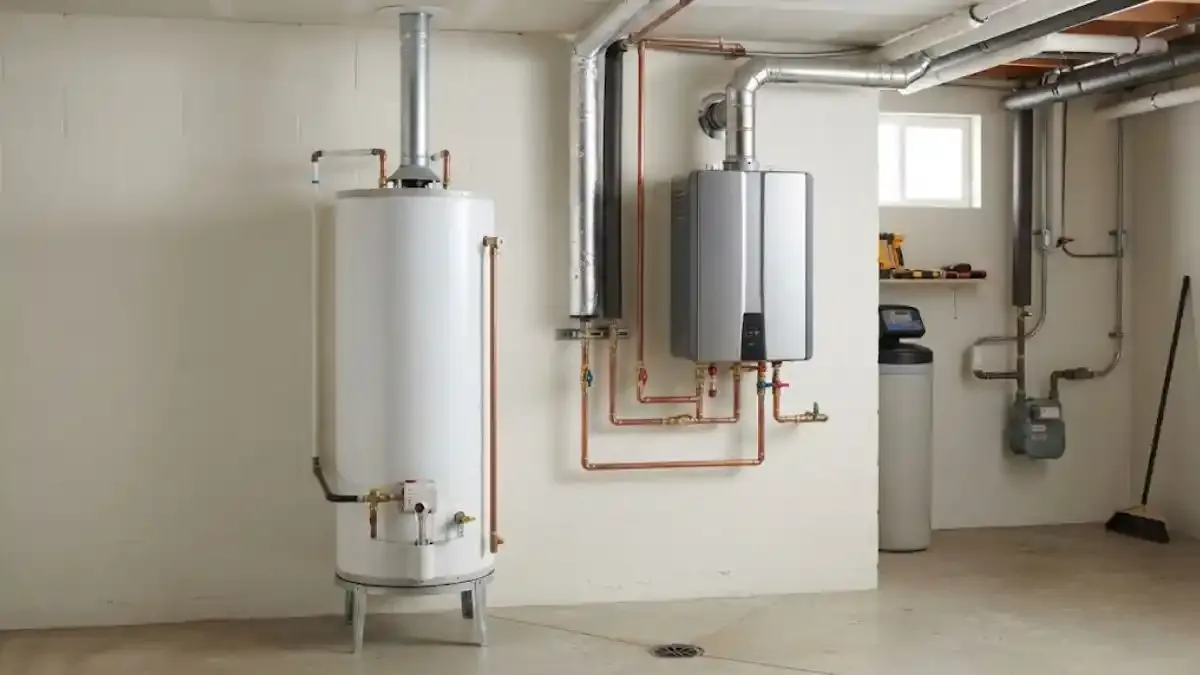
A tankless water heater recirculation pump moves hot water through the pipes between the heater and your farthest fixture so the water near the tap stays warm. Instead of running the shower for a minute to clear cold water, hot arrives sooner. The pump is the small circulator, and it is often paired with a timer, a button or a temperature sensor.
In a home in Braintree, MA, the useful question is which setup fits your piping. There are several common ones, and each changes cost, comfort and how the heater behaves. The sections below explain the mechanics, the trade-offs, and the symptoms that signal trouble.
The mechanism in plain words
Without a pump, hot water sits in the pipe after you close the tap and cools in the wall. The next time you open it, you must flush that cold slug out before hot water arrives. A recirculation pump circulates water from the heater to the far end of the hot line and back, so the pipe stays warm.
On a tankless unit this matters because the heater only fires when it senses flow. A pump that moves water through the loop gives the heater the signal it needs, or the pump is controlled so it runs only at set times or on demand.
Four common setups compared
The right choice depends on whether your house already has a return line and what the heater maker allows.
| Setup | How it works | Main trade-off. |
|---|---|---|
| Dedicated return line. | A separate pipe carries water from the far fixture back to the heater. | Best performance but needs a new pipe run, often hard in a finished house. |
| Crossover valve under the farthest sink. | A valve lets the cold line act as the return, so the cold tap runs lukewarm for a while. | Easy to retrofit but warms the cold line. |
| Built-in pump and buffer. | Some tankless models include a small internal tank and pump. | Simple, but only on models that offer it, and follows the maker's rules. |
| Pump with demand button or motion sensor. | The pump runs only when someone asks for hot water. | Saves energy but needs a deliberate trigger. |
Check your heater's installation manual before adding any pump. The maker states which setups and pump types it supports, and an unsupported setup can void the warranty.
What a pump changes about the heater
A recirculation pump is a comfort feature, but it affects how the heater behaves.
Short cycling.
Slow flow through the loop may be too little to keep the burner running, so the unit lights, shuts off and lights again.
Cold water sandwich.
If the pump stops and starts, a slug of cold water can arrive between two hot pulses, which is the classic tankless complaint.
Heat loss in the pipes.
A warm loop sheds heat all day. Insulating the hot line and using a timer keeps energy waste down.
Wear on the heater.
More firing cycles means more wear on the ignition parts and heat exchanger.
Noise.
Pumps hum, and a loop with air in it gurgles. A bleed and an isolation valve for service help.
Warm cold line.
With a crossover setup, expect the cold tap at the far sink to deliver lukewarm water until the loop cools.
None of these rule out a pump. They are the reason to plan the control method before installing.
Not sure which setup suits your house?
Call (617) 752-0573 with your heater model and where the farthest fixture is. A licensed plumber can say which options your piping allows.
Braintree: soft water and pipes in cold spaces
Braintree's Water and Sewer Department reported hardness of 47.8 mg/L in its 2024 water quality report, about 2.8 grains per gallon by our own conversion. That is soft water. Scale is less likely to coat a pump or heat exchanger here than in hard water areas, though the heater still needs its periodic service. Ask your utility for the current report to see your own supply.
State plumbing code 248 CMR 10.05 requires adequate provision to protect piping that is outside, under a building, exposed, in unheated areas or in exterior walls from freezing. A new return line often has to run through exactly those spaces. A warm loop helps, but it is not freeze protection, so ask your installer how any added pipe will be insulated and routed.
How a recirculation retrofit is planned
Check the heater and manual.
The plumber confirms whether your tankless model supports a pump, which type, and any warranty conditions.
Pick the loop.
The plumber decides between a dedicated return, a crossover valve or a built-in pump, based on your wall access and the layout of the house.
Choose the control.
A timer suits fixed routines, a button or motion sensor suits irregular use, and a temperature sensor holds the loop at a set point.
Insulate, bleed and test.
The hot line is insulated, air is bled from the loop, and the heater is run through several cycles to check that it fires smoothly and does not short cycle.
Troubleshooting a pump that is not helping
Try these before calling, and note what you find for the plumber.
- Confirm the pump has power and is not tripped at the outlet.
- Check that the timer or sensor setting matches your routine.
- Listen for the pump motor humming when it should be running.
- Feel the return line for warmth to confirm water is moving.
- Note whether the far cold tap runs lukewarm.
- Look for drips at the pump or its isolation valves.
Repair, replace or leave it alone
A pump that has stopped is often a simple replacement. A pump that runs but gives no benefit is more often a controls or flow issue, which our tankless water heater page covers in detail. If the heater itself throws error codes or short cycles, see the water heater repair page for how a technician finds the cause.
We also dispatch to nearby towns, including Weymouth and Holbrook. Give the dispatcher your heater model and pump type so the right parts come along.
Recirculation pump questions from Braintree homeowners
No. Some have a built-in pump, some accept an external one, and some do not support it at all. Check the manual or ask a plumber before buying a pump.
The pump itself uses little, but keeping the loop warm sheds heat. A timer, a demand trigger and insulated pipes keep the cost down.
That is typical of a crossover valve setup, where the cold line serves as the return. It fades after the pump stops. A dedicated return line avoids it.
It can reduce it by keeping the heater firing steadily, but poor settings or a heater with a minimum flow limit can still cause it. A plumber tunes both.
You can, but it wastes heat and wears the parts. A timer for morning and evening use is a common compromise.
The Town's report shows soft water, so scale builds more slowly than in hard water areas. The heater still needs periodic service. Ask your plumber how often, based on your manual and a look at the inlet filter.