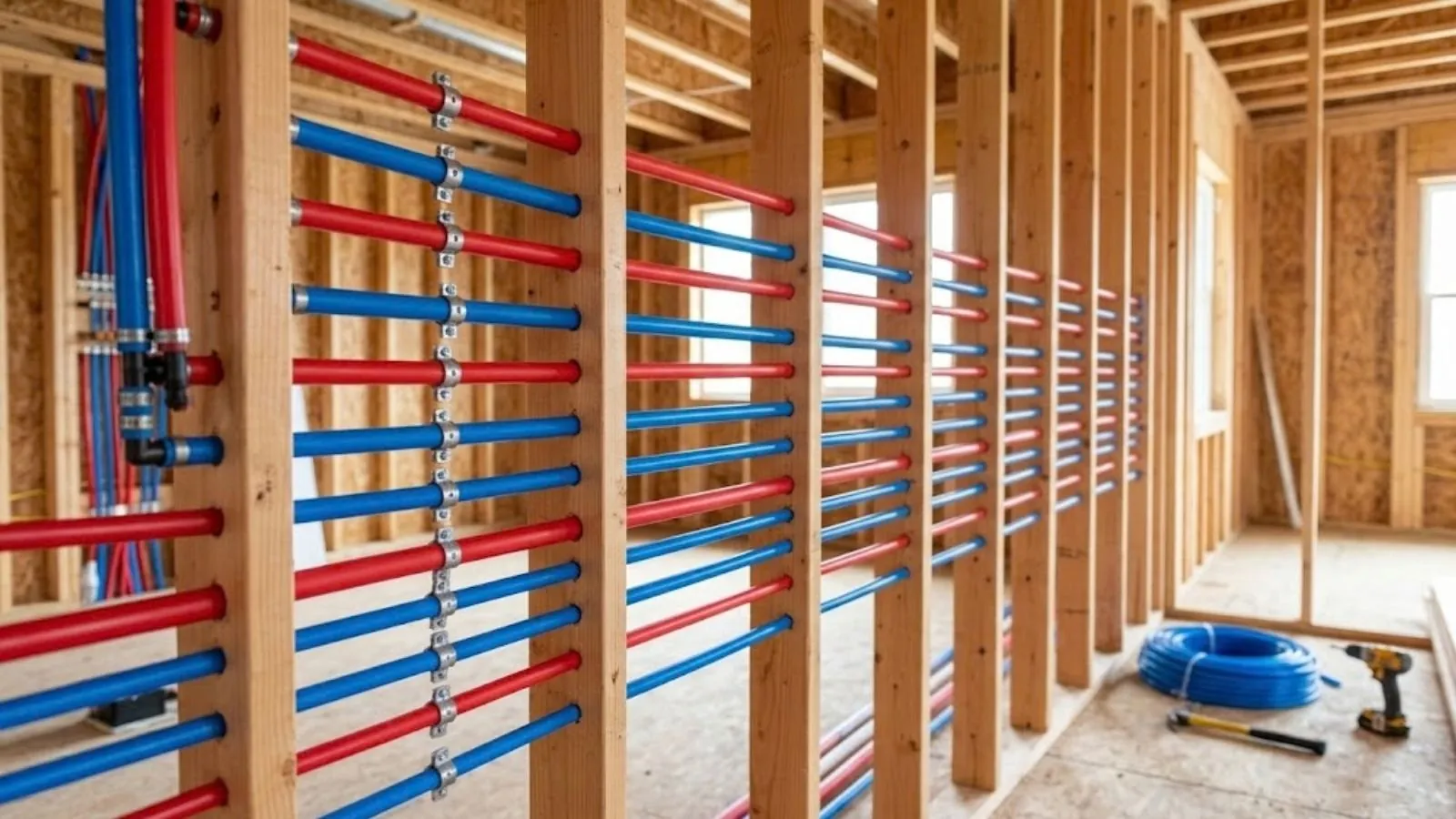
Repiping in Braintree, MA means replacing the water supply lines inside a house, usually from the main valve to every fixture, with new pipe. It is a different job from fixing a single leak, and it is worth considering when pipes are failing in more than one place or the material itself is the problem. The 24/7 line is for burst pipes. This page covers the planned job.
The short answer on whether you need it is this: one leak is a repair, repeated leaks in different rooms are a pattern, and certain materials fail on a schedule. The rest of this page helps you tell which situation you are in.
Why housing age matters in Braintree
The median Braintree house was built in 1957, and about 27.5 percent of homes date to 1939 or earlier. Another 27.3 percent were built between 1940 and 1959. That means more than half of local homes were built before 1960, in an era when galvanized steel and early copper were standard.
Pipe built into a house in those years is now well past 60 years old. Galvanized steel corrodes from the inside, narrowing until pressure drops and rust shows. Early copper lasts much longer, but it can still develop pinholes, especially where the water chemistry or installation was unfavorable. Age is a reason to inspect, not an automatic reason to replace, so a camera or pressure test comes before a decision.
About three quarters of Braintree homes were built before 1980, so this question applies to far more than the oldest houses.
Signs the pipes inside your walls are near the end
No single sign proves a repipe is needed. A cluster of them is what changes the answer.
Low pressure at several fixtures.
Corrosion inside galvanized pipe reduces the opening. Pressure drops first at the far end of the house and when two fixtures run at once.
Brown or rusty water.
Rust-colored water that clears slowly after sitting overnight often points to corroding steel pipe. Braintree's report also lists manganese above the aesthetic limit, which can stain, so rule that out first.
Pinhole leaks in different rooms.
A second and third leak in unrelated places usually means the pipe wall is thinning everywhere.
Visible green or white crust.
Mineral crust or green corrosion on copper joints and fittings shows where a leak has started or will.
A history of patches.
If the same line has been repaired several times, each repair makes the next one more likely nearby.
Polybutylene or mixed pipe.
Gray plastic pipe from the late 1970s through the mid 1990s is known for failing at fittings. A mix of metals and plastics can also corrode where they meet.
If you are seeing leaks but are not sure where, a leak detection visit can tell you whether they come from one line or from the system as a whole.
Common pipe materials and what to do about each
What you have decides what the plan looks like.
| Material you may have | Typical age or era in older homes | What usually happens | Usual recommendation. |
|---|---|---|---|
| Galvanized steel. | Mid 1900s and earlier. | Rust narrows the pipe and pressure falls. | Replace once symptoms appear. |
| Original copper. | 1950s onward. | Can last decades, may pinhole in places. | Inspect and replace only the failing runs unless several leak. |
| Polybutylene (gray plastic) | Late 1970s to mid 1990s. | Fittings can fail without warning. | Plan replacement. |
| CPVC. | 1980s onward. | Becomes brittle with age and heat. | Monitor and replace if cracking. |
| Lead service or fittings. | Older homes. | Water-quality concern more than a leak concern. | Ask the Water and Sewer Department about the service line. |
The table is a guide. A pressure test and a look at cut samples is what confirms the pipe's condition.
Thinking about replacing the pipes?
Call the line and describe your house and what the pipes are doing. We will plan a walk-through.
PEX or copper for the new pipe
Both are accepted choices for a whole-house job. The right one depends on your house, your budget and how you want the work done.
PEX.
- Flexible, so it can be pulled through walls with fewer openings.
- Fewer joints, which means fewer places for leaks to start.
- Resists corrosion and handles minor freeze expansion better than rigid pipe.
- Must be protected from sunlight and used with correct fittings.
Copper.
- Rigid, long track record and fire resistant.
- Joined with solder or press fittings and needs more access.
- Can corrode in some water conditions and develop pinholes.
- Usually takes more labor and time than PEX.
How a repipe works in a house you still live in
The job is usually phased so you are not without water longer than necessary.
Walk-through and plan.
The plumber maps every fixture, checks the main valve and meter and decides where access holes are needed. You get the scope and a clear price before work starts.
Permit and scheduling.
State rules say plumbing work that replaces pipe needs a permit before it begins, and permits go only to licensed individuals. Ask the Town's Inspector of Plumbing and Gas how inspections are scheduled.
Run new lines and connect.
New pipe is run through basements, crawlspaces and chases, and fixtures are tied in room by room. Water is shut off for part of each day, not for the whole job.
Test, inspect and patch.
The system is pressure tested, inspected and flushed. Access holes in drywall or plaster are patched, and finishing paint or carpentry is a separate scope unless agreed.
Staying in the house, and what to expect on the days of work
Most repipes happen with the household in place. Expect noise, dust, and water shutoffs for parts of the day, so plan for showers, laundry and cooking around the schedule. Moving breakables and clearing the paths to the basement and kitchen saves time.
Plaster walls, common in older Braintree homes, need extra care, because cutting access can crack a large area. A good plumber works from basements, closets and ceilings first and opens plaster only where there is no other path. Ask which walls will be opened before the work starts.
If you have a bathroom or kitchen remodel coming, the pipes should be planned together. See plumbing installation for rough-in and layout questions that overlap with a repipe.
What drives the cost of a whole-house repipe
There is no honest flat figure, because houses differ. These are the factors that decide the number.
Insurance rarely pays for replacing old pipe that has not failed, but it may cover sudden damage from a burst. If your pipes are already leaking, talk to your insurer before work starts. Call for the real number on your house.
Repipe, repair or reroute: how to decide
Not every old house needs a full repipe. A single failed run can be rerouted, or a failing section replaced, if the rest tests well. A burst pipe repair fixes one break, and a leak under a floor may be fixed by moving the line overhead.
The case for a full repipe is strongest when the material is the problem, when leaks are spreading and when you plan to stay in the house. If you are about to sell, a smaller targeted repair may make more sense. If the buried pipe from the street is the problem, water service line repair is a separate job from repiping, because it covers the pipe outside the foundation.
We also serve Weymouth and the nearby towns, so call to schedule a walk-through.
Is repiping right for my house?
Look at exposed pipes in the basement. Galvanized steel is gray, threaded and magnetic, while copper is orange-brown. A plumber can confirm quickly.
State rules say work that replaces plumbing needs a permit before it starts, and permits go only to licensed individuals. Ask the Town's Inspector of Plumbing and Gas how it applies to your project.
Usually yes. The work is phased so water is off for part of each day. Plan around showers, laundry and cooking.
It depends on the number of fixtures, house layout and access. The plumber will give a schedule after the walk-through, and the schedule can change if hidden problems appear.
PEX approved for potable water is widely used in homes. Ask the plumber which product is being installed and confirm it carries the required marking.
Not necessarily. A single leak is a repair. If several leaks have appeared in different places or the pipe material is known to fail, a repipe becomes worth considering.
Replacing narrowed galvanized pipe often restores pressure, because the opening is full size again. If the cause is the street supply or a valve, repiping will not change it.