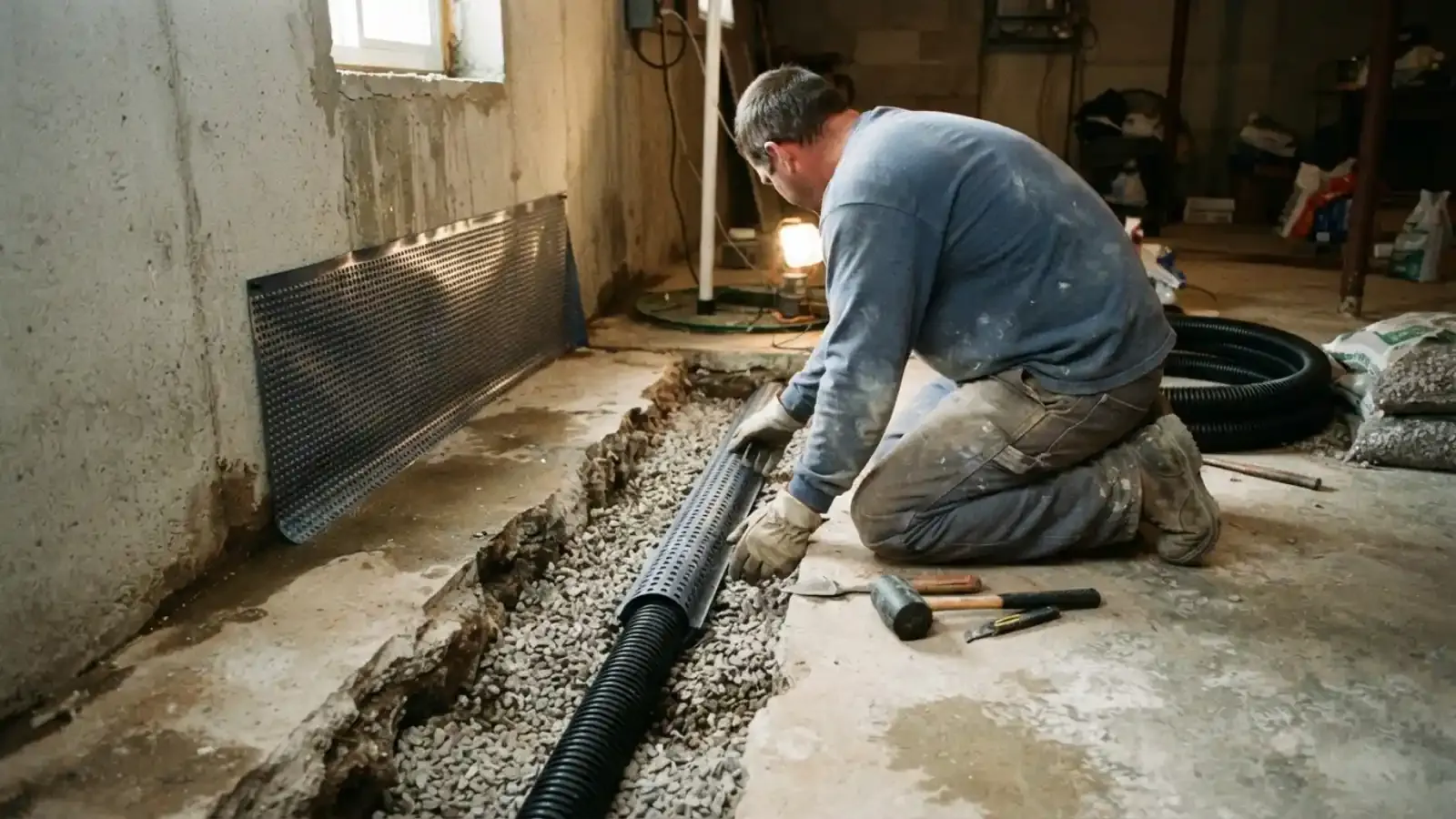
Basement waterproofing in Braintree, MA is the work of keeping groundwater and leaks out of the lowest level of your house, and it begins with working out which kind of water you have. Water on a basement floor may come from the ground, from the roof and yard, or from a pipe inside the house, and each needs a different fix.
A plumber's part in that work is real but specific. We find pipe and drain sources, install interior drainage and sump systems, and make sure every discharge ends where the rules allow. Wall coatings, exterior excavation, and masonry repair are often done by other trades, and we say so when a job belongs to one of them.
How we find where the water comes from
Selling a waterproofing system before knowing the source wastes money. This is the sequence we follow.
Test the plumbing first.
We shut off the water, read the meter for movement, and check supply lines, the water heater, the washer hookups, and the boiler. A running meter with nothing on points to a pipe.
Check the drains and sewer.
Floor drains, laundry standpipes, and the main drain are tested for backup and seepage, and a camera inspection tells us if the sewer line is leaking in or out.
Read the water pattern.
Water at the wall and floor joint after rain, along a crack, or rising through the slab each tell a different story. We note timing against weather.
Look outside.
Gutter discharge, downspouts, grading, window wells, and the sill height all matter. Many wet basements trace back to roof water dumped at the foundation.
Where basement water comes from and who fixes it
This table sorts the usual sources by what fixes them.
| Source | How it looks | Usual fix | Plumber's role. |
|---|---|---|---|
| Pipe or fixture leak. | Constant dampness, a running meter, or stains below a bathroom. | Repair the line or fixture. | Full role, including leak location. |
| Drain or sewer seepage. | Odor, damp near a floor drain, wet spots over the sewer path. | Repair or reline the drain. | Full role. |
| Groundwater through the floor. | Water rising at the slab joint after heavy rain. | Interior drain and sump pump. | Full role. |
| Water through the wall. | Seepage along a crack or a damp stripe after storms. | Exterior drainage or crack repair, plus a pump if water collects. | Pump and drain piping. |
| Roof and yard runoff. | Water at one wall after rain, near a downspout. | Extend downspouts, regrade, add a drain. | Drain piping where needed. |
| Condensation. | Cold pipes and walls that sweat in summer. | Dehumidify and insulate pipes. | Pipe insulation. |
The plumbing rows come first because they are the cheapest to rule out and the most damaging to miss.
What a plumber can and cannot do about wet basement walls
A plumber installs the water handling parts: drain channels, pits, pumps, check valves, discharge piping, and the plumbing fixtures around them. A plumber also finds supply and drain leaks that mimic groundwater. These are plumbing jobs and fall under the permit rules in 248 CMR 3.05, so ask the Braintree plumbing inspector whether your job needs one.
Wall coatings, exterior membranes, excavation to the footing, crack injection in poured concrete, and masonry repair are often done by waterproofing or masonry contractors. Those trades also often handle regrading and foundation work. Some homes need both, and we are glad to work around another contractor and coordinate where the drain meets the pump.
Not sure what is wetting your basement?
Call (617) 752-0573 and tell us when the water appears. We start with the pipes and drains before recommending a system.
Interior drainage: the pieces of the system
An interior system collects water where it enters and moves it to a pump. Each part has a job.
Perimeter channel.
A trench cut along the base of the wall holds a perforated pipe in washed stone, then is patched with new concrete. Water entering at the joint falls into the pipe.
Sump pit and pump.
The channel leads to a pit sunk below the slab. A pump with a float switch lifts water to an outside discharge.
Check valve and discharge.
A check valve keeps water from falling back. The discharge pipe goes outdoors and ends where water runs away from your foundation.
Cleanouts and access.
A good system has access points so the channel can be flushed. Without them, silt eventually clogs it.
Vapor and wall treatment.
A wall liner or sealant may be added to guide moisture to the channel. It manages seepage and is not a patch for pressure through the wall.
Backup power.
A battery backup keeps the pump working during outages. Storms that flood basements often interrupt the power as well.
Our sump pump installation and repair page goes deeper on pumps, floats, and backups.
The discharge rule that shapes every Braintree system
The Braintree Water and Sewer Department's regulations prohibit discharging sump pumps, roof drainage, foundation drains, and cellar floor drainage into the sanitary sewer. That rules out the easy fix of piping a basement pump into a floor drain or a sewer cleanout. The water goes outside, away from the foundation, and the plan for where it goes comes before any trench is cut.
The same rules treat inflow and infiltration as a violation. A confirmed case gives the owner ten days to hire a contractor, then a certified notice and a final ten days before a daily fine may be levied. If you inherit a house with a pump already piped to the sewer, treat it as something to fix. Ask the department if you are unsure of the connection.
Rain, rivers, and older foundations in town
The Blue Hill weather station in Milton records about 54 inches of precipitation in an average year, which is the nearest long record to Braintree. That volume keeps the soil around a foundation wet for much of the year, so a basement that is dry in August may take on water in April. We ask when your basement is wet because the timing narrows the cause.
Census survey data shows the median Braintree home was built in 1957, and roughly 27 percent date to 1939 or earlier. Older foundations have more joints, more cracks, and fewer drains than modern ones, and some predate any perimeter drainage. That is why an interior system is a common approach and why we look at the slab edge before quoting.
In March 2010, more than nine inches of rain over a few days sent the Monatiquot and Farm Rivers over their banks, according to the Town. River flooding like that is a different problem from a seeping wall, and no basement system fully prevents it. A pump with a battery backup still improves your odds.
Interior drainage or exterior waterproofing
Neither is always right. The choice depends on the source and the house.
Interior drainage tends to suit.
- Water arriving at the slab joint or through the floor.
- Finished landscaping, tight lots, or a house close to the lot line.
- A basement where the goal is a dry floor and managed seepage.
- Homes where a pump and backup can be added.
Exterior work tends to suit.
- A wall with a single large crack leaking in.
- Failed old coatings on an accessible wall.
- Open ground where excavation is practical.
- A foundation repair that needs the soil removed anyway.
What shapes the cost of waterproofing
Two basements of the same size can sit far apart in cost. Call (617) 752-0573 for a visit and a clear price before work starts.
Most homeowner policies exclude seepage and rising groundwater. A burst pipe or a sudden appliance leak may be treated differently, so check your policy and photograph conditions before cleanup.
Wet basement questions from Braintree homeowners
Shut off every water use in the house and check whether the meter still moves. If it does, you have a pipe leak, and leak detection can locate it. If it does not, rain timing points toward groundwater.
We install interior drainage, sump pits, pumps, and discharge piping, and we find pipe leaks. Exterior membranes, excavation, and masonry repair are often done by other trades, and we tell you when a job belongs to one.
Outside, away from the foundation. The Water and Sewer Department's rules prohibit discharging sump pumps, roof drains, and foundation drains into the sanitary sewer.
Plumbing work generally needs a permit under 248 CMR 3.05, and permits go to licensed individuals. Ask the Braintree plumbing inspector about your specific job.
Humidity, a slow drain leak, or condensation on cold pipes can do it. We check the drains and pipes first, and if a sewer seep is suspected, our sewer inspection service can scope the line. We also serve nearby Holbrook.