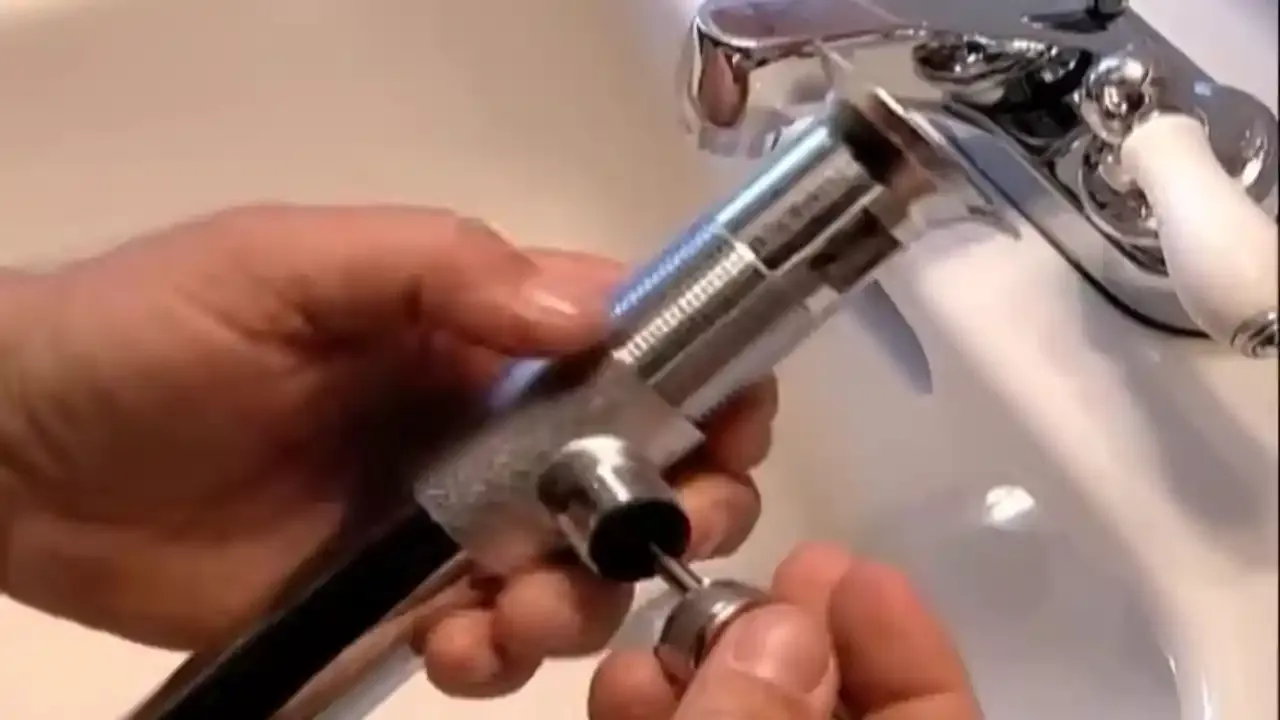
A kitchen faucet sprayer in Braintree, MA that has gone weak, leaks or will not switch is usually suffering from one of three things. These are a clogged nozzle face, a kinked or blocked hose, or a diverter that no longer sends water to the spray. Each has a check you can do in a few minutes with a bowl of vinegar water and a flashlight.
Leaks are different. A drip from the head or under the sink points to a worn hose, washer or connection, and those parts are replaceable. This page walks through the checks in order so you do not replace parts that were never broken.
Match the symptom to the likely cause
Start with what you see and hear, then follow the matching row.
| What happens | Likely cause | First thing to try. |
|---|---|---|
| Spray is weak or sprays sideways. | Clogged holes in the nozzle face. | Unscrew the head and soak it, then clear each hole. |
| Spray is weak but the faucet runs fine. | Kinked hose or stuck diverter. | Check the hose under the sink, then test the diverter. |
| Spray will not start when you press. | Diverter or the sprayer button has failed. | Remove the faucet spout cap and inspect the diverter. |
| Water leaks from the head or handle. | Worn washer or cracked head. | Replace the washer or the head. |
| Wet cabinet under the sink. | Hose connection or hose wall leaking. | Dry everything, then find the wet spot with a towel. |
| Hose will not retract. | Counterweight slipped or hose twisted. | Reposition the weight and untwist the hose. |
Check a weak sprayer in this order
Do these in order. The first two are free and fix a lot of cases.
Soak the nozzle.
Unscrew the sprayer face or aerator, drop it in warm vinegar water for a while and pick out the holes with a pin. Rinse and reattach.
Check the hose path.
Open the cabinet and follow the hose from the faucet to the connections. Look for kinks, a loop that has fallen below its weight or something pressed against it.
Test with the sprayer removed.
Disconnect the hose at the supply, point it in a bucket and briefly open the water. If flow is strong there, the hose and faucet are fine and the sprayer head is the problem.
Inspect the diverter.
Pull the spout or the cap and check the small valve that switches flow. Debris or a worn seal can leave it half open, which weakens the spray.
How a kitchen sprayer sends water where it should
When you press the sprayer, a small internal valve called a diverter blocks the spout and sends water down the hose. In a separate side spray, the diverter sits in the faucet body. In a pull-down or pull-out faucet, the hose is the spout and the diverter is part of the sprayer head.
Knowing which design you have saves time. A side spray that stops working often has a bad diverter or a worn hose, while a pull-down that sprays sideways almost always has a clogged head.
Is the cabinet filling with water?
Close the shutoffs under the sink and call (617) 752-0573. We answer around the clock and book same-day appointments when available.
Common sprayer faults and what repairs them
Most parts are standard and inexpensive. The trick is to match the part to your faucet brand and model.
Clogged spray head.
Debris or deposits block the holes. Soaking and picking them clear usually restores the pattern.
Worn diverter.
The valve no longer seals fully, so spray is weak and the spout drips. The diverter is a replaceable part for most models.
Kinked or cracked hose.
A hose that has been squeezed or has aged develops a weak spot. Replacement hoses come in standard lengths.
Loose or worn connection.
Fittings under the sink loosen over time and the washers wear. A leak here shows as drips on the cabinet floor.
Slipped counterweight.
On pull-down models a weight on the hose keeps it retracting. If it slides up, the hose sticks out or tangles.
Worn faucet cartridge.
If the faucet itself is dripping or the handle is loose, the cartridge may be the cause and the sprayer a side effect.
Fix the sprayer or replace the faucet
Sprayer parts are cheap, but not every faucet is worth keeping.
Repair is a sound choice when.
- The faucet is otherwise in good condition.
- Parts for your brand and model are available.
- The fault is a head, hose or diverter.
- You like the faucet's reach and finish.
Replacement is a better choice when.
- Several parts are worn and the faucet is old.
- The finish is pitted or the body leaks at the base.
- Parts for the model can no longer be found.
- You were already planning a sink or counter update.
Water under the sink that will not stop
If the cabinet is wet and the leak keeps going, close the shutoff valves under the sink, or the main if they will not turn, and mop the area dry. Do not run the sprayer to see if it is still leaking.
Then call (617) 752-0573. We take calls around the clock and book same-day appointments when available.
When a repair is bigger than the sprayer
A sprayer that fails again and again, a faucet that leaks at the base and low pressure at every tap are signs the problem is not the sprayer. Corroded supply lines, a failing shutoff or a plumbing issue behind the wall will need a plumber's eye. Our faucet repair page covers the cartridge, stem and valve work that goes with it.
If you decide to replace the faucet, a plumbing installation visit covers new supply lines and shutoffs at the same time, which is cheaper than doing them in separate trips.
What Braintree's soft water means for a clogged sprayer
The Braintree Water and Sewer Department's 2024 Water Quality Report lists hardness at 47.8 mg/L. That is about 2.8 grains per gallon by an approximate conversion, which is soft water. Mineral scale is a smaller cause of clogged nozzles here than in hard water towns, so if your sprayer clogs repeatedly, look for sediment or grit from the pipes rather than assuming scale.
The same report puts pH at 7.75, which is in the normal range. Because scale is less likely, a vinegar soak is still a fine first step, but if the holes clog again within weeks, ask a plumber to look at the supply lines. Old galvanized pipes and failing shutoffs can shed debris, and a quick flush at the supply often shows it.
Faucet sprayer questions
A clogged nozzle face is the most common cause, followed by a kinked hose and a worn diverter. Soak the head in vinegar water, check the hose under the sink and then inspect the diverter.
The diverter may no longer seal, or the sprayer head's washer is worn. Water takes the easier path out of the hose or head. Replacing the diverter or the washer usually stops it.
If the sprayer weakens as the spout runs, the spout drips after you switch, or the sprayer will not start at all, suspect the diverter. Inspecting it means opening the faucet body.
Yes on most faucets. Hoses are standard parts, but you need the right length, thread type and brand. Check the model number on the faucet or under the sink before you buy.
A drip from the head is not. A wet cabinet that keeps filling is. Close the shutoffs under the sink and call if you cannot stop it or the cabinet floor is soft.
Less than you might expect from scale. The town's 2024 water report lists hardness at 47.8 mg/L, which is soft. Clogs are more likely from sediment or debris, so repeated clogs deserve a look at the supply lines.