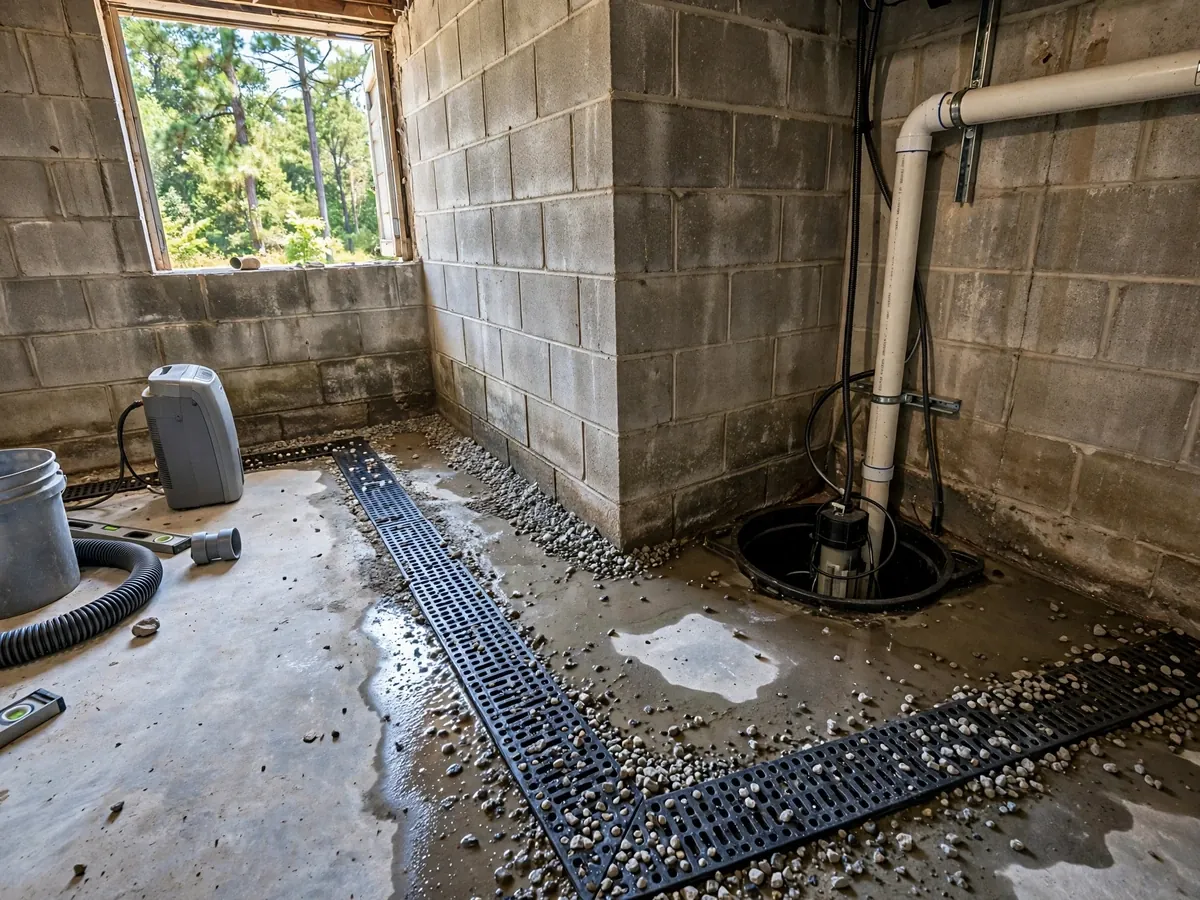
The cost of waterproofing a basement in Braintree, MA comes down to five things. They are where the water enters, how much foundation must be opened, whether a sump pump and discharge line are needed, how hard the space is to work in, and what must be refinished afterward. Nobody can give an honest number without seeing the basement, so this page covers factors instead of a price.
Waterproofing means stopping water from entering through the floor, the walls or the joint where they meet, or collecting it and sending it somewhere safe. Cheap checks come first. A look at gutters, grading and the plumbing often shows the real cause before anyone digs.
Rule out a plumbing leak before you price a system
Plenty of damp basements are not groundwater problems at all. A weeping supply line, a failing water heater, a washer hose or a drain that leaks only when used can all leave a wet floor that looks like seepage. Paying for an interior drain system to fix a pipe leak is the most expensive mistake on this list.
A simple test separates the two. Turn off every fixture and appliance that uses water, then look at your water meter. If the dial or the low-flow indicator keeps moving, water is leaking somewhere in the house and you want leak detection before any waterproofing quote. If the meter sits still, groundwater or surface water is the more likely source.
Where the water comes from and what it usually calls for
Match what you see to the likely source. The last column shows how that source tends to push the cost of the job.
| What you see | Likely source | Usual approach | Effect on cost. |
|---|---|---|---|
| Wet floor after heavy rain, dry in dry weeks. | Groundwater rising under the slab. | Interior drain channel and a sump pit with a pump. | Moderate to high, driven by footage of drain and floor cutting. |
| Damp or dripping wall after storms. | Surface water against the foundation. | Gutter extensions, regrading, exterior sealing if needed. | Often the lowest if grading fixes it, much higher if the wall must be excavated. |
| Water along the wall to floor joint. | Hydrostatic pressure at the cove. | Interior drainage along that wall. | Depends on how many walls are affected. |
| Pooling that does not follow the weather. | Plumbing leak. | Trace and repair the pipe. | Usually far below a waterproofing system. |
| Fine white powder on masonry, no puddles. | Moisture passing through block or concrete. | Sealer, ventilation, dehumidification. | Low, but it will not stop active seepage. |
Water on the floor right now?
Shut off the water at the main valve and call (617) 752-0573. We take calls around the clock and book same-day appointments when available.
The five factors that move a waterproofing quote
Every written quote you collect should make these five factors visible. If one is missing, ask where it went.
Homeowners policies often treat sudden pipe failures differently from groundwater seepage, and many exclude seepage entirely. Read your policy or ask your agent before work starts. Do not assume a waterproofing system will be covered, and keep photos and invoices either way.
For the plumbing side of a job, call (617) 752-0573 and we will give you a clear price before work starts.
Interior drainage versus digging outside
These are the two main routes. Neither is better in every case, and the right one depends on the foundation and the yard.
Interior drain and sump.
- Collects water at the footing line and sends it to a pit.
- Works from inside, so yard plantings and walkways stay put.
- Needs a pump, which means electricity, maintenance and ideally a battery backup.
- Cuts into the slab edge, so finished floors are disturbed.
Exterior excavation and sealing.
- Keeps water off the wall instead of collecting it afterward.
- Needs access around the house, which many lots do not offer.
- Disturbs landscaping, steps and sometimes utilities.
- Often paired with an exterior drain that runs to daylight or a pit.
Reading two quotes side by side
Two quotes can look similar and cover very different work. Ask each contractor for the linear feet of drain, whether the sump pit and pump are included, what the discharge line connects to, and who is responsible for patching the floor. Ask what happens if they find something unexpected once the slab is open.
A low quote that leaves out the pump or the finish repair is not lower, it is shorter. Line the quotes up item by item, and if you want the plumbing parts checked, our basement waterproofing page explains what a plumber can and cannot do on these jobs.
Seepage or condensation? A quick check
Tape a square of aluminum foil tightly to a bare wall, sealed on all four edges, and leave it for a day or two. Moisture on the outside face of the foil means humid basement air is condensing on a cool wall. Moisture on the wall side, under the foil, means water is coming through the wall.
Where basement water is allowed to go in Braintree
Braintree's Water and Sewer Department rules prohibit sump pumps, roof leaders, exterior foundation drains, areaway drains and cellar floor drainage from discharging to the sanitary sewer. For a waterproofing job that settles where collected water can go: outside, on your own property, without becoming a problem for neighbors or the street. A quote that quietly ties the system into the house drain deserves a hard question.
The same rules make it a violation to allow inflow or infiltration into the sewer. An owner who is notified gets 10 days to hire a contractor, then a certified-mail notice with a final 10 days, and daily fines can follow after that. If you are unsure how your pump or floor drain is connected, ask the Braintree Water and Sewer Department before you buy a bigger system, and consider a sump pump check first.
Housing age is a useful clue too. Census 2020 to 2024 estimates put the median year homes were built at 1957, and about three quarters of Braintree homes predate 1980. Older foundations are more often block or stone, so expect a close inspection before pricing.
Basement waterproofing questions from Braintree homeowners
No responsible number exists before an inspection. Budget by getting two or three itemized written quotes and compare footage of drain, pump and discharge, and finish repair. Add a cushion for related repairs that may turn up once the floor is open.
No. Exterior sealing and grading fixes may not need one. Interior drainage almost always ends in a sump pit, so the pump, battery backup and discharge line should be listed as their own line items.
Interior systems are often the smaller scope because they avoid excavation, but that is not a rule. Long runs of drain, finished floors and difficult access can narrow the gap. Compare the full scope, not just the headline.
A plumber can handle the water side of the job, including sump pits, pumps, discharge piping and tracing plumbing leaks. Masonry sealing and excavation are often separate trades, so ask who is responsible for each part of the scope.
Routine waterproofing is generally treated as home maintenance, and groundwater seepage is excluded by many policies. Sudden pipe failures may be handled differently. Ask your insurer before work starts and keep records.
No. Braintree's Water and Sewer rules prohibit sump pump discharge, cellar floor drainage and foundation drains from entering the sanitary sewer. Discharge has to go outside. If a pump is wrongly connected, an owner who is notified has 10 days to hire a contractor to fix it.